Category: Dog Training

Welcome to the Dog Training section within our Select Dog Training collection, your go-to resource for everything related to raising well-behaved and obedient pets. Our curated content covers essential training methods, behavior correction techniques, and advanced skills to help you and your dog thrive together. Whether you’re a new pet owner or an experienced trainer, you’ll find practical tips and expert advice to make training sessions fun and effective.

Key Topics Covered:

  1. Basic Obedience Training:
    • Sit, Stay, and Come Commands: Teach foundational commands every dog should know.
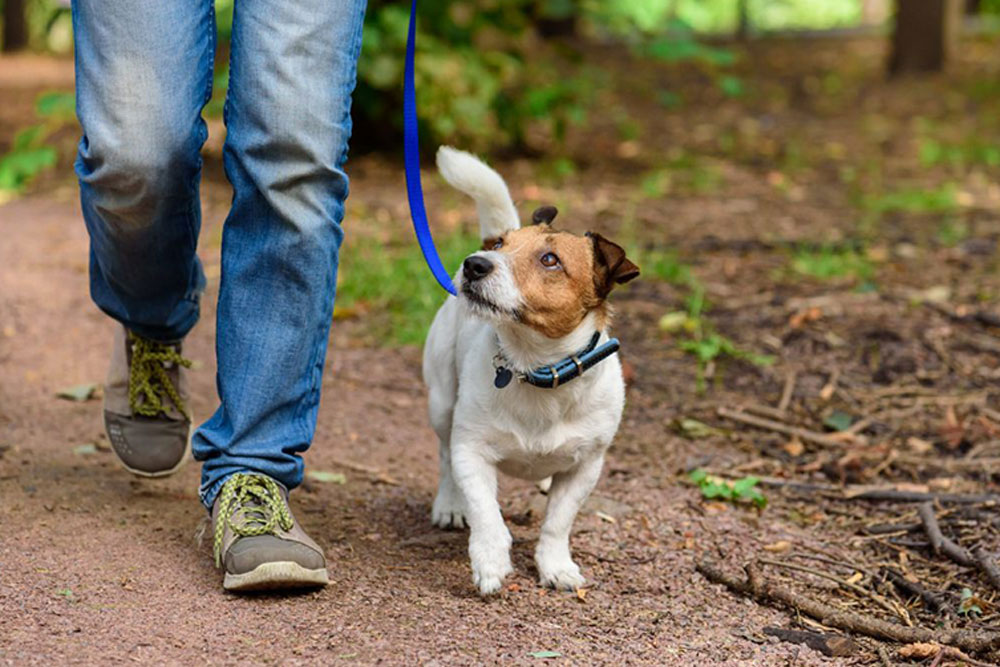
    • Loose-Leash Walking: Learn techniques for comfortable, stress-free walks.
    • Recall Training: Ensure your dog returns to you reliably every time.
  2. Behavioral Training:
    • Potty Training: Quick and effective tips for housebreaking puppies.
    • Barking Control: Manage excessive barking with positive reinforcement techniques.
    • Separation Anxiety Training: Help your dog stay calm and confident when left alone.
  3. Advanced Training Techniques:
    • Agility Training: Improve your dog’s coordination with agility courses.
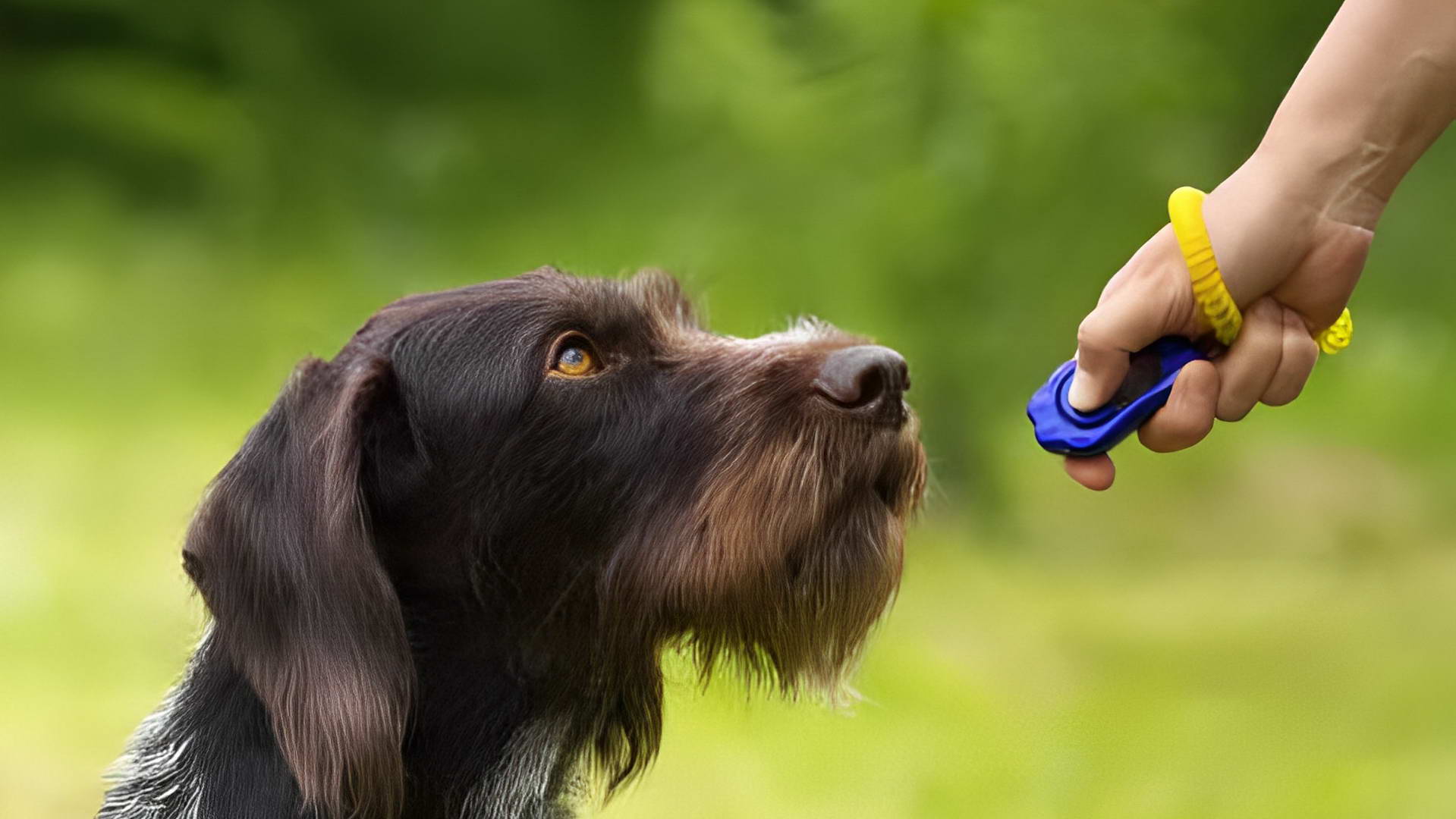
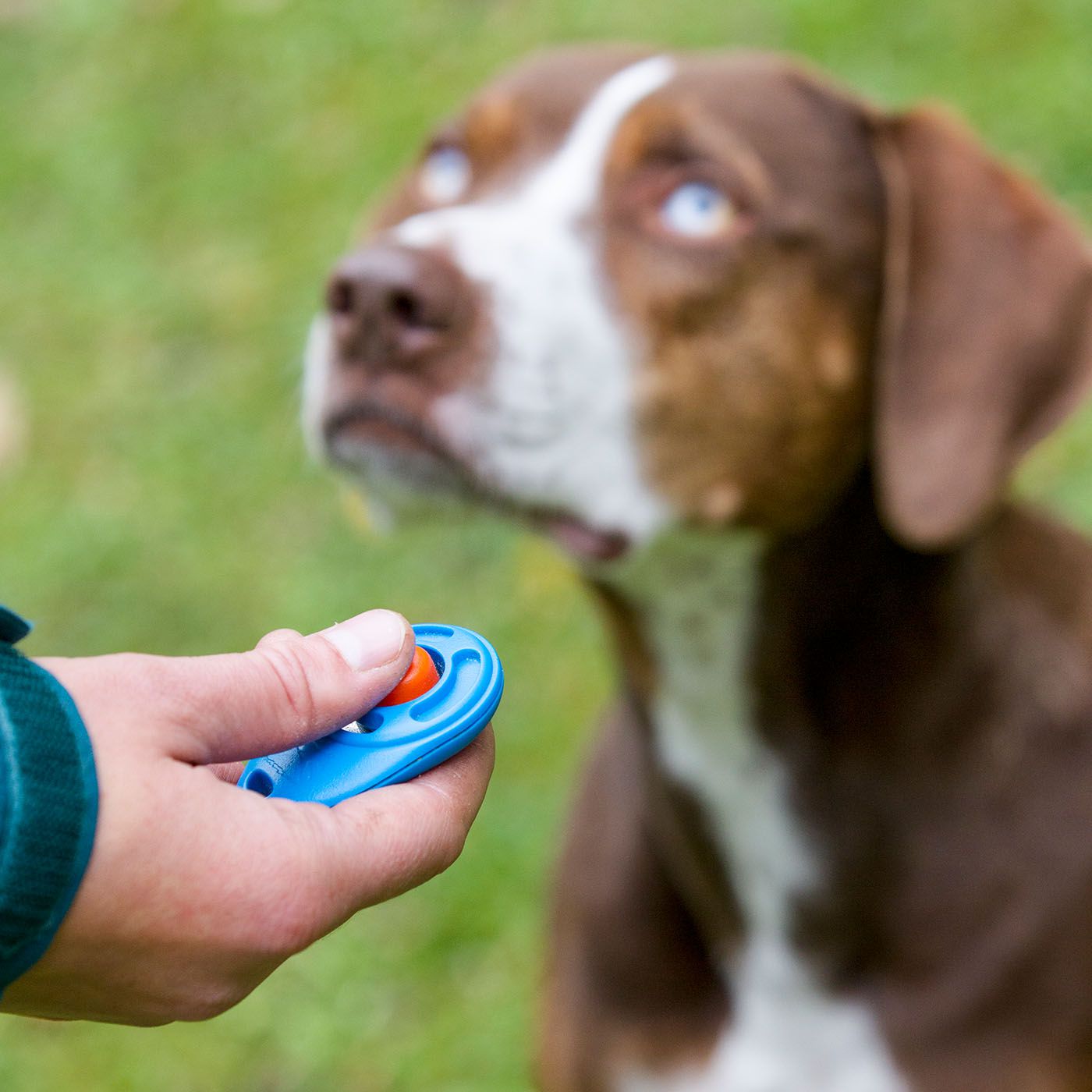
    • Clicker Training: Master the art of positive reinforcement using a clicker.
    • Scent Training: Teach dogs to use their noses for games or search-and-rescue skills.
  4. Training for Specific Purposes:
    • Crate Training: Make crate time safe and enjoyable for your pet.
    • Socialization Training: Help your dog interact safely with people and other animals.
    • Therapy Dog Training: Prepare your dog for certification as a therapy animal.
  5. Age-Appropriate Training:
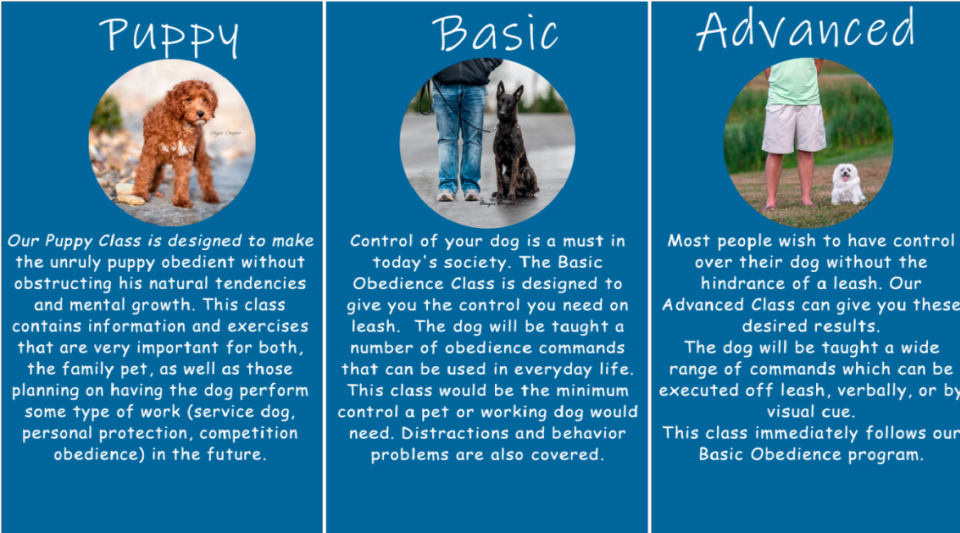
    • Puppy Training: Focus on teething, socialization, and early obedience.
    • Adult Dog Training: Build on existing skills or correct behavioral issues.
    • Senior Dog Training: Keep older dogs active with gentle exercises and mental stimulation.
  6. Training Tools and Aids:
    • Harnesses, Collars, and Leashes: Choose the right equipment for training.
    • Treat-Based Training Tools: Use treats effectively to reinforce learning.
    • Interactive Toys for Training: Incorporate toys into lessons to keep your dog engaged.
  7. Behavioral Correction:
    • Nipping and Chewing Control: Stop destructive chewing and playful biting.
    • Jumping Up Behavior: Train your dog to greet politely without jumping.
    • Fear and Aggression Management: Manage fearful or aggressive behavior safely.
  8. Training for Special Situations:
    • Travel Training: Prepare your dog for road trips and air travel.
    • Vet Visit Training: Help your dog stay calm during vet appointments.
    • Event Training: Train your dog for special events like competitions or public outings.
  9. Training at Home vs. Professional Help:
    • DIY Training Tips: Learn how to conduct effective training at home.
    • When to Hire a Professional Trainer: Know when expert guidance is needed.
  10. Care and Maintenance During Training:
  • Mental Stimulation and Rest: Balance learning with downtime to prevent burnout.
  • Consistency and Patience: Maintain consistency in commands and rewards for the best results.

Our Dog Training collection provides everything you need to raise a well-behaved, happy, and healthy pet. Whether you’re focusing on obedience, behavior correction, or specialized skills, our expert guides will help you train your dog with confidence. Explore our selection today and set your furry friend on the path to success!

  • How to Teach Your Dog to Drop It: Ultimate Training Guide

    How to Teach Your Dog to Drop It: Ultimate Training Guide

    Ever wondered how a simple command like “drop it” can transform your dog’s behavior and ensure their safety? Teaching your dog to drop it is essential, especially when they pick up something dangerous. With over 90% of dogs able to learn this command through consistent training, it’s a skill every pet owner should prioritize. We understand that you’re seeking effective methods to train your dog without frustration, and that’s exactly what we’ll investigate into. From the basics of introducing the command to handling stubborn pups, our guide provides step-by-step strategies to make training successful. By the end, you’ll have the confidence to teach your dog to drop it reliably, improving both their safety and your peace of mind.

    Why Teach Your Dog to Drop It

    Teaching your dog the “drop it” command enhances safety, prevents household annoyances, and improves play interactions.

    Safety

    This command ensures your dog releases dangerous items, such as dropped medication or toxic foods like chocolate. According to Wiggle Butt Academy, over 90% of dogs learn “drop it” with consistent training. Implementing this command minimizes the risk of your dog swallowing harmful substances, providing peace of mind for pet owners. Also, it allows swift intervention in emergencies, reducing potential health hazards. For example, if a dog picks up a piece of broken glass, the “drop it” command can prevent injuries, ensuring the pet remains unharmed.

    Preventing Annoyances

    “Drop it” effectively stops dogs from stealing and chewing on household items like shoes, remote controls, or valuable objects. By using this command, we protect our belongings from damage and reduce household frustrations caused by unwanted chewing behaviors. This control enhances overall harmony in the home, ensuring that pets do not disrupt daily life with inappropriate item theft. Besides, it fosters respect for personal property, contributing to a well-behaved and obedient pet.

    Improving Play

    In games like fetch, “drop it” ensures your dog releases the ball or toy after retrieval. This command makes playtime more enjoyable and efficient, fostering positive interactions between you and your dog. Consistent use of “drop it” during play reinforces good behavior and strengthens the bond between pet and owner. Also, it facilitates structured play sessions, making them more predictable and fun. Enhanced play behaviors also contribute to the dog’s physical exercise and mental stimulation, promoting overall well-being.

    Expert trainers, such as Nicole Kohanski from Wiggle Butt Academy, emphasize the importance of “drop it” in comprehensive dog training programs. With the right tools—a toy, training treats, and patience—most dogs can master this essential behavior. Practicing “drop it” in various situations and environments ensures your dog responds reliably, improving overall training efficacy and safety. Also, incorporating “drop it” into daily routines solidifies the command, making it an integral part of your dog’s obedience repertoire.

    Preparing for Training

    Effective training begins with thorough preparation. We ensure we have the right tools and setting to help successful learning.

    Gather Necessary Supplies

    We collect essential supplies to make the training process smooth. High-value treats serve as strong motivators, encouraging our dogs to release items willingly. Opt for small, tasty treats that our dogs find irresistible. Also, a sturdy leash provides control during training sessions, allowing us to guide our dogs effectively. A clicker can enhance communication by marking the desired behavior precisely. We also include a variety of durable toys to practice the “drop it” command in different scenarios. Water bowls and comfortable seating help maintain a positive environment during training. By assembling these supplies, we create a structured and rewarding training experience that fosters quick learning and consistency.

    Choose the Right Environment

    Selecting an appropriate environment is crucial for successful training. We choose a quiet, distraction-free area to help our dogs focus on the commands. A familiar space, like our living room or backyard, provides comfort and reduces anxiety, making it easier for our dogs to learn. If we plan to train outdoors, we ensure minimal interruptions from other animals or noises. Consistent training locations help our dogs associate the environment with learning, improving their responsiveness. Also, we ensure the area is safe, free from hazards that might tempt our dogs to pick up unwanted items. By carefully selecting the training environment, we create an optimal setting that supports effective learning and reinforces the “drop it” command.

    Step-by-Step Training Methods

    Teaching your dog to “drop it” involves consistent training using various effective methods. Here are the primary techniques we recommend:

    Using Treats to Encourage Dropping

    Using treats is a reliable method to teach your dog to drop items. First, offer a low-value toy that your dog likes but isn’t overly attached to. Let them hold the toy for a few seconds. Next, play and introduce the treat by placing a high-value treat near their nose. Your dog should naturally release the toy to take the treat.

    Once they drop it, reward and repeat by praising them or using a clicker, then give the treat immediately. Hide the toy behind your back while they eat, and after they’ve finished, present the toy again to reinforce the behavior. Finally, add the verbal cue by saying “drop it” before showing the treat. Consistently practicing this method helps your dog associate the command with releasing the toy in anticipation of a reward.

    Using Toys to Teach “Drop It”

    Incorporating toys into the training process can make learning “drop it” more captivating for your dog. Start by selecting a neutral toy that your dog shows interest in but doesn’t obsess over. Allow your dog to play with the toy briefly to build interest. Then, offer a high-value toy or another favorite item as a trade. When your dog releases the initial toy to take the new one, immediately praise and reward them.

    Repeat this exchange multiple times, gradually increasing the duration your dog holds the toy before offering the trade. This method leverages your dog’s natural desire to play, making the “drop it” command a part of enjoyable interactions. Consistent practice with different toys in various settings ensures your dog reliably responds to the command.

    Implementing the Trade Method

    The trade method effectively teaches your dog to “drop it” by offering something of equal or greater value in return. Begin by conditioning the drop cue: say “drop it” and scatter treats to create a positive association. Once your dog anticipates treats upon hearing the cue, introduce objects for them to hold, starting with neutral items. Gradually progress to higher-value objects, always following up with a treat scatter.

    Ensure you have a treat pouch with high-value treats handy. When your dog holds an item, calmly say “drop it” and scatter the treats. As your dog releases the object to eat the treats, praise and reward them immediately. Practice this method in different environments, such as during walks or in the yard, to reinforce the behavior consistently. Over time, your dog will understand that dropping items leads to positive rewards, making the command second nature.

    Teach Your Dog to Drop It

    Reinforcing the “Drop It” Command

    To ensure your dog reliably responds to the “drop it” command, reinforcement is essential. Consistent practice solidifies the behavior, making it second nature for your dog during various situations.

    Phasing Out Treats

    Gradually reducing treats maintains your dog’s responsiveness to the “drop it” command without constant rewards. Start by offering treats less frequently, pairing them with praise or a favorite toy. For example, after your dog drops the item reliably, alternate between treats and verbal praise like “Good job!” This method encourages your dog to obey the command for approval rather than just for treats. Also, introduce high-value rewards sporadically to keep your dog motivated. By slowly decreasing treat dependency, your dog learns to respond consistently, even when treats aren’t immediately available. This approach ensures long-term obedience and reinforces the “drop it” command as a reliable behavior in everyday situations.

    Consistent Commands and Voice Tone

    Maintaining consistent commands and a uniform voice tone is crucial for effective training. Use the exact phrase “drop it” every time, avoiding variations like “let go” or “release.” Consistency helps your dog associate the exact words with the desired action. Also, keep your voice tone steady and assertive when issuing the command. A calm yet firm tone underscores authority, making it clear that you expect compliance. Avoid yelling or using a harsh tone, as this can create confusion or anxiety. Reinforcing the “drop it” command with uniform language and tone ensures your dog understands and responds appropriately, improving overall communication and obedience.

    Practicing in Different Situations

    Successfully teaching your dog to “drop it” requires consistent practice across various environments and scenarios. Adapting training to different toys, locations, and activities ensures your dog responds reliably in any situation.

    Varying Toys and Locations

    We use a variety of toys and practice in multiple locations to reinforce the “drop it” command. Starting with low-value items like tennis balls at home helps establish the basics. Gradually, we introduce higher-value items such as favorite chews or household objects like shoes. This variety prevents your dog from associating the command with a exact item.

    Choosing diverse locations enhances your dog’s understanding. We begin in quiet areas like the living room, where distractions are minimal. As your dog becomes more proficient, we move training sessions to busier environments like parks or streets. This progression ensures your dog can drop items regardless of the setting. By varying both toys and locations, we create a comprehensive training experience that strengthens your dog’s obedience and adaptability.

    Incorporating into Games

    Integrating the “drop it” command into games makes training enjoyable and effective. We incorporate the command into fetch by asking your dog to drop the ball before throwing it again. This repetition reinforces the behavior in a fun context.

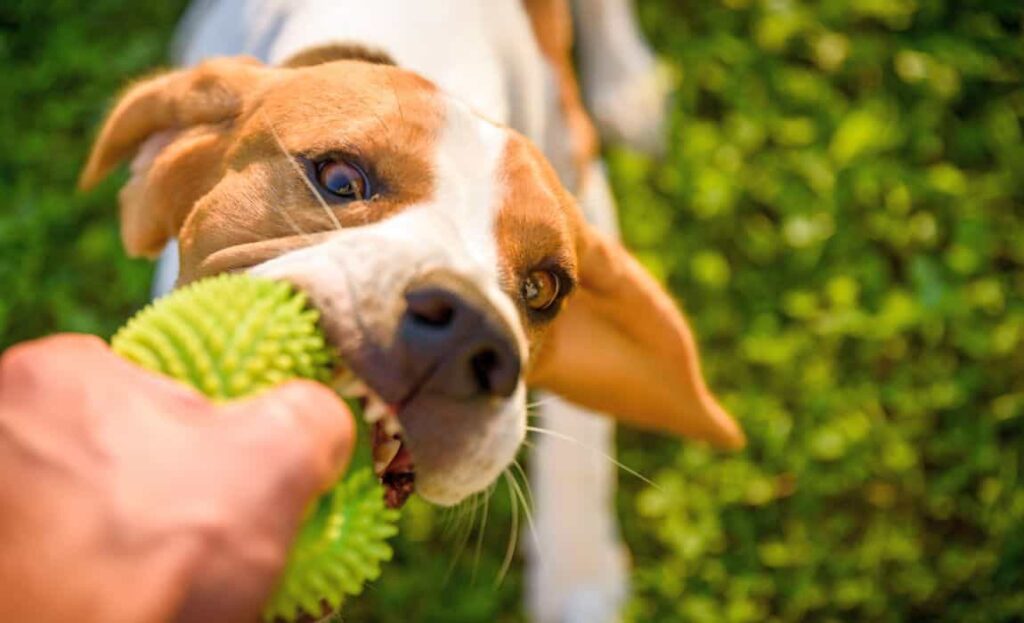
    We also use tug-of-war to practice “drop it.” During the game, we pause and calmly instruct your dog to release the toy. Rewarding compliance with praise or treats encourages your dog to respond promptly. Also, hiding treats around the house and asking your dog to drop items they find adds variety to the training routine.

    By embedding the command into play, we ensure training feels natural and rewarding. This approach maintains your dog’s interest and eagerness to learn, leading to a more reliable response when it matters most.

    Handling Training Challenges

    Dealing with Reluctant or Aggressive Dogs

    When teaching your dog to drop it, some may show reluctance or aggression. Resource guarding often triggers these behaviors, causing dogs to protect what they have. Instead of punishing, offer high-value treats and praise to create a positive association. Avoid harsh discipline, as it can increase protectiveness and lead to biting, weakening your bond. Use a calm, assertive tone when issuing the “drop it” command. Gradually increase the difficulty by introducing distractions and varying environments. Consistent positive reinforcement helps your dog understand that releasing items leads to rewards, reducing aggressive responses over time. Patience and compassion are key to overcoming these challenges and ensuring effective training.

    Managing Dangerous Items

    Managing dangerous items requires swift and consistent training to ensure your dog’s safety. Identify objects that pose risks, such as medications, toxic foods, or small choking hazards. Use the “drop it” command immediately when your dog engages with these items.

    Tempt them with high-value treats to encourage dropping. Toss treats near your dog to distract them from the dangerous object, then throw another treat farther away to reinforce the trade. Consistently practicing in various locations helps generalize the command, making it effective in different scenarios. Avoid punishment, as it can lead to fear or resource guarding. By prioritizing positive reinforcement and swift action, you can effectively manage and mitigate the risks associated with dangerous items.

    Common Mistakes to Avoid

    Avoiding common pitfalls ensures effective training when teaching your dog to drop it. Here are key mistakes to watch out for:

    Inconsistent Commands

    Using varied phrases or tones disrupts your dog’s understanding. Maintain the exact verbal cue “drop it” with a consistent, calm tone to reinforce the command effectively.

    Low-Value Treats

    Offering treats that lack appeal reduces motivation. Use high-value treats, such as small pieces of chicken or cheese, to encourage your dog to release the toy reliably.

    Neglecting Reinforcement

    Failing to consistently reward successful responses weakens the training. Reinforce the “drop it” command every time initially, then gradually reduce treat frequency while maintaining occasional rewards.

    Training in Distracting Environments

    Practicing in areas with high distractions hampers focus. Start training in a quiet, familiar space, then slowly introduce new environments as your dog becomes proficient.
    Punishing Instead of Encouraging

    Using punishment creates fear and resistance. Focus on positive reinforcement techniques, praising and rewarding your dog to build a trusting and cooperative relationship.

    Overcomplicating the Process

    Introducing too many commands or changes too quickly confuses your dog. Keep training sessions simple and focused on the “drop it” command to ensure clear understanding and retention.

    Rushing the Training

    Expecting immediate results leads to frustration for both you and your dog. Allow your dog to learn at their own pace, providing ample time for each step before progressing.

    Ignoring Body Language

    Failing to observe your dog’s signals can hinder training progress. Pay attention to signs of stress or confusion, adjusting your approach to keep the training positive and effective.

    Using High-Value Items Unnecessarily

    Introducing very valuable items too early can lead to resource guarding. Start with low-value toys and gradually incorporate higher-value items as your dog becomes more reliable with the “drop it” command.

    Lack of Patience and Persistence

    Giving up too soon prevents mastery of the command. Stay patient and persistent, consistently practicing the “drop it” command to achieve long-term success.

    By steering clear of these common mistakes, we enhance our ability to teach our dogs the “drop it” command effectively. Consistency, positive reinforcement, and patience are key to successful training.

    Conclusion

    Mastering the “drop it” command transforms our relationship with our dogs improving safety and fostering trust. By committing to consistent training using positive reinforcement we create a harmonious environment where our dogs listen reliably in various situations. Embracing patience and understanding allows us to overcome challenges ensuring successful learning. As we continue practicing and reinforcing this essential skill our dogs become more obedient and our bond grows stronger. This valuable command not only safeguards our pets but also enriches our everyday interactions making life together more enjoyable.
  • Dog Tie Out Safety: Essential Tips and Best Practices

    Dog Tie Out Safety: Essential Tips and Best Practices

    Have you ever wondered if you’re tying out your dog the right way? Tying out a dog isn’t just about keeping them in one spot—it’s about ensuring their safety and well-being. As responsible pet owners, we strive to create environments where our dogs can enjoy the outdoors without risking their health or freedom.

    In today’s fast-paced industry, many of us seek effective answers for managing our dogs when we’re away. Incorporating the right tie out methods can make a important difference. In this text, we’ll investigate into the best practices for tying out your dog, discuss the essential gear you need, and highlight common mistakes to avoid.

    By the end, you’ll understand how to balance security with comfort, ensuring your dog remains happy and safe whether they’re in the yard or elsewhere. Let’s explore how to make tying out your dog a positive experience for both you and your furry companion.

    What Is a Dog Tie Out?

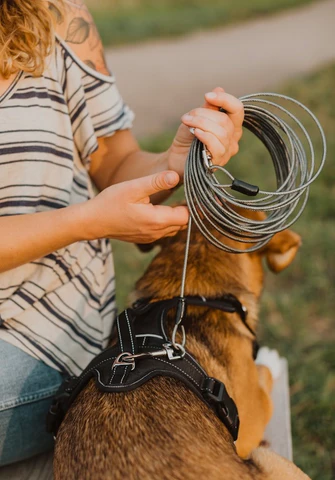
    A dog tie out restrains a dog to a exact area, typically outdoors, ensuring safety and preventing escape. We use a tie out dog by fastening it to a stationary object like a stake, post, or tree with a durable chain, cable, or rope. This setup allows dogs to sit and lie down comfortably without roaming freely. Single dog tie outs cater to individual pets, featuring a single stake and chain combination. In contrast, multiple dog tie outs, also known as chain gangs, accommodate several dogs by connecting smaller cables to a main line.

    Essential components of a tie out dog system include a thick, hardened steel stake, usually 24 to 30 inches long, with a swivel top to avoid tangling. The chain or cable should measure around 2 feet, providing enough length for comfort while minimizing the risk of injury or entanglement. High-quality tie out dog setups use rust-resistant materials, ensuring longevity and reliability in various outdoor conditions. When installing a tie out dog system, we prioritize ease of installation and secure attachment to withstand strong pulls from large dogs, sometimes up to 200 pounds.

    Properly maintained tie out dogs contribute to responsible pet ownership by balancing a dog’s need for freedom with safety and containment. Also, tie out dog systems serve as valuable training tools, helping dogs understand boundaries and fostering good behavior. By selecting the right type and components for a dog tie out, we create a secure and comfortable environment for our pets, whether in the yard, at the beach, or during camping trips.

    Types of Tie Outs

    Choosing the right tie out dog system ensures your pet’s safety and comfort outdoors. We explore the primary types to help you make an well-informed choice.

    Chain Tie Outs

    Chain tie outs use thick, heavy chains to secure dogs to a stationary object. They often replace lighter tethers when dogs chew through or escape earlier restraints. Chains provide robust durability, especially for strong or determined dogs. But, they pose important risks.

    Chains can cause raw, sore necks and collars may dig painfully into a dog’s skin. Also, dogs tethered by chains face dangers like entanglement, strangulation, and attacks from other animals or people. Chains generally weigh more, which can be cumbersome when managing multiple dogs. If you require a tie out for many pets, the combined weight may become a nuisance.

    Also, unless using high-quality, rust-resistant chains, they can deteriorate quickly when exposed to the elements. We must consider these factors to ensure the safety and well-being of our dogs when selecting chain tie outs.

    Cable Tie Outs

    Cable tie outs use lighter ropes, cables, or pulley systems to restrain dogs. This method serves as a partial restraint, making it more prevalent than chaining. Cables are easier to manage, reducing the risk of tangling and simplifying installation. They are lighter, which becomes advantageous when tying out multiple dogs simultaneously.

    For instance, managing 68 dogs with chains can be impractical due to their combined weight, whereas cables offer a more efficient solution. Also, cable tie outs often feature rubber-wrapped materials, improving durability and minimizing wear from active retrievers.

    Unlike chains, cables are less likely to cause injuries like sore necks or collars digging into the skin. They also resist rust when made from high-quality materials, ensuring longevity. Our experience shows that cable tie outs provide effective restraint while maintaining ease of use and safety for both single and multiple dog setups.

    Benefits of Using Tie Outs

    Providing Outdoor Freedom and Exercise

    Tie out dog systems grant our dogs the freedom to explore within a set boundary. They enable pets to play, run, and satisfy their curiosity safely. Energetic breeds, such as retrievers and herding dogs, benefit from extensive physical activity. For example, overhead trolley systems allow multiple dogs to exercise simultaneously, ensuring each dog receives adequate movement. This freedom helps maintain physical health and reduces behavioral issues caused by pent-up energy.

    Safety and Security

    Tie out dog answers enhance our dogs’ safety by restricting access to potential dangers. They prevent escapes, keeping dogs away from traffic, wild animals, and hazardous areas. Stake-style tie outs offer a fixed attachment point, while spiral tie outs provide extra anchoring for strong pullers. According to industry standards, using a hardened steel stake reduces the risk of the tie out being pulled out by the dog. Also, stainless steel tie out components resist rust, ensuring long-term security and reliability.

    Training and Behavioral Management

    Tie out dog tools play a crucial role in training and managing behavior. They help our dogs learn boundaries and respond to commands effectively. During training sessions, tie outs allow dogs to cool down and recover without the risk of overheating or dehydration.

    For instance, after an intense training exercise, a tie out provides a safe space for dogs to rest and hydrate. Also, when managing multiple dogs, tie outs help correct unwanted behaviors like barking, whining, and digging by keeping each dog within view. This visibility allows us to address issues promptly, reinforcing positive behaviors and discouraging negative ones.

    Easy Monitoring and Maintenance

    Using tie out dog systems simplifies the monitoring of multiple dogs. We can oversee each dog’s activities, ensuring they remain safe and behave appropriately. Cable tie outs, in particular, are lightweight and less prone to tangling compared to chain tie outs. This ease of maintenance allows for quick adjustments and repositioning as needed. Also, choosing the right tie out length, typically around two feet, minimizes the risk of entanglement and injury, maintaining a safe environment for our pets.

    Durability and Cost-Effectiveness

    Investing in high-quality tie out dog equipment offers long-term benefits. Durable materials like stainless steel and reinforced cables withstand harsh weather conditions and high energy dogs. This durability reduces the need for frequent replacements, making tie outs a cost-effective solution for pet owners. Besides, versatile tie out systems can accommodate different dog sizes and breeds, providing flexibility and value for various training and outdoor activities.

    By integrating tie out dog systems into our routine, we ensure our pets enjoy outdoor freedom while maintaining their safety and fostering good behavior.

    Potential Risks and Safety Considerations

    Risk of Entanglement and Strangulation

    Tying out a dog can lead to entanglement in the cable or chain, causing injuries or fatalities. Unsupervised dogs may wrap around trees or become hooked on hidden objects, increasing the danger. Securing the tie-out system properly minimizes these risks and ensures the dog’s safety.

    Physical and Psychological Harm

    Continuous tethering can result in physical issues like raw necks and collars that grow into the dog’s skin. Also, dogs may experience insect bites, parasites, and lack proper veterinary care. Psychologically, tied-out dogs often become anxious, aggressive, and experience reduced social interaction, leading to behavioral problems.

    Inadequate Shelter and Protection

    Dogs on tie-outs frequently lack access to adequate shelter, exposing them to extreme weather conditions such as intense heat, freezing temperatures, rain, or snow. Providing a secure and weather-resistant shelter is essential to protect tied-out dogs from environmental hazards.

    Best Practices for Tie Out Usage

    Ensuring the safety and comfort of our dogs when using a tie out requires following several best practices. By implementing these guidelines, we promote a secure and enjoyable environment for our pets.

    Supervision and Duration

    Supervision is crucial when tying out our dogs. We avoid leaving them unattended for extended periods to prevent accidents and ensure their safety. Regularly checking the tie out area allows us to address any potential issues promptly.

    Dog Tie Out Safety

    Selecting Appropriate Equipment

    Choosing the right equipment is essential for effective tie out usage. We use sturdy materials like plastic-coated steel cables or flat stock webbing with secure clips. Avoiding chain links and see-through wire minimizes visual stress and reduces the risk of injury. Heavy-duty metal rings or T-posts enhance stability, preventing the lead from twisting or the dog from escaping.

    Proper Installation

    Correct installation of the tie out system ensures its effectiveness. We install posts at least 5 feet above the ground and secure them firmly to withstand the dog’s movements. Positioning the tie out away from high-traffic areas reduces distractions and stress for our dogs.

    Utilizing Swivels

    Incorporating a swivel beneath the tie-out point is a best practice that prevents leash tangling. Swivels help smooth movement, allowing our dogs to explore without getting entangled in the lead. This addition enhances the overall functionality of the tie out system.

    Providing Shelter and Shade

    We ensure that tied-out dogs have access to adequate shelter and shade. Installing a dog house or a canopy protects them from extreme weather conditions, maintaining their comfort and well-being during outdoor activities.

    Regular Equipment Maintenance

    Maintaining tie out equipment is vital for long-term safety. We routinely inspect cables, clips, and posts for signs of wear or damage. Promptly replacing any compromised components prevents potential hazards and extends the lifespan of the tie out system.

    Training and Boundaries

    Using tie outs as training tools helps our dogs understand boundaries. We establish clear limits within the tie out area, promoting good behavior and reducing anxiety. Consistent training reinforces the intended boundaries, making the tie out experience positive for our pets.

    Monitoring Multiple Dogs

    When managing multiple dogs, we use individual tie outs to prevent conflicts and ensure each dog’s safety. Organizing separate areas for each dog minimizes competition and promotes harmony among pets.

    By adhering to these best practices, we create a safe, secure, and comfortable tie out environment for our dogs, improving their outdoor experiences and overall well-being.

    Camping with your Dog Just got Easier.

    Camping with our dogs becomes seamless when we use a reliable tie out dog system. Setting up a tie out dog anchor ensures our pets enjoy the outdoors safely. We choose spiral stakes made of stainless steel, which twist securely into various soil types, providing a stable base for the tie out cable.

    Selecting the appropriate cable is crucial for a hassle-free camping experience. Vinyl-coated aircraft cables offer durability and resist tangling, allowing our dogs to roam freely within the designated area. We typically opt for 30ft cables, providing ample space while maintaining control over our dogs’ movements.

    Implementing a swivel leash enhances the functionality of the tie out dog setup. Swivels prevent the leash from twisting, reducing discomfort for our pets and minimizing wear on the cable. This feature is especially beneficial during active camping activities, where dogs may move unpredictably.

    Safety remains a top priority when camping with a tie out dog setup. We ensure the anchor point is away from potential hazards such as water sources or steep drops. Regularly inspecting the tie out system helps us identify any signs of wear or damage, maintaining the integrity of the setup throughout the trip.

    Providing adequate shelter is essential for our tied-out dogs. We position portable dog tents or shade structures within the tie out radius, protecting our pets from extreme weather conditions. Access to fresh water and secure bedding further enhances their comfort during camping adventures.

    Managing multiple dogs requires strategic tie out dog arrangements. Using separate anchors for each pet prevents entanglement and reduces conflicts, promoting a harmonious camping environment. We coordinate anchor placements to ensure each dog has sufficient space while remaining within our supervision range.

    Portable tie out anchors simplify the transportation and setup process. Lightweight and collapsible designs allow us to carry the tie out system effortlessly, adapting to different camping sites with ease. Investing in high-quality, portable equipment ensures our camping trips remain enjoyable and stress-free for both us and our dogs.

    By integrating these practices, camping with our dogs becomes more manageable and enjoyable. A well-planned tie out dog system provides the freedom our pets crave while maintaining their safety and our peace of mind.
    Is a Chain or Cable Better for Dog Tie-Outs?

    When choosing between a chain or cable for dog tie-outs, several factors determine the best option for your needs.

    Weight and Portability

    Chain tie-outs generally weigh more than cable tie-outs. For instance, a single chain can weigh up to 5 pounds, making it cumbersome when managing multiple dogs. In contrast, a cable tie-out typically weighs around 1.5 pounds, offering greater portability, especially when tying out up to eight dogs.

    Ease of Installation

    Cables are easier to install and maintain untangled compared to chains. Chains can become tangled, requiring extra effort to lay out correctly. Cables, wrapped in rubber, remain organized and simplify the setup process, saving time during installation.

    Durability

    Both chains and cables offer durability, but their maintenance differs. High-quality chains resist wear but can rust without proper care. Cables, particularly those with rubber coatings, demonstrate excellent resistance to weather elements and remain durable even under high-energy activity from retrievers.

    Safety and Tangle Risk

    Safety is paramount when using dog tie-outs. Chains pose a higher risk of causing severe injuries if a dog becomes entangled. Conversely, cables reduce this risk due to their flexible nature, making them a safer option for preventing injuries and minimizing tangling incidents.

    Comparative Table

    FactorChain Tie-OutsCable Tie-Outs
    WeightHeavier, up to 5 lbs per chainLighter, around 1.5 lbs per cable
    PortabilityCumbersome for multiple dogsEasier to manage for up to 8 dogs
    InstallationProne to tangling, difficult setupSimple, stays untangled
    DurabilityRusty without maintenanceDurable, weather-resistant
    SafetyHigher injury risk from tanglesLower injury risk, safer choice

    Practical Implications

    For single dog tie-outs, the weight difference may be negligible. But, when managing multiple dogs, cables prove more practical due to their lighter weight and ease of installation. Also, cables’ enhanced safety features make them preferable for environments where dogs are active and prone to movement.

    By evaluating these factors, we find that cable tie-outs offer important advantages in terms of portability, installation ease, durability, and safety, making them the better choice for most dog owners.

    What Behaviors you Don’t Want on Tie Outs

    Maintaining proper behavior while tied out ensures your dog’s safety and the preservation of your property. We focus on addressing common issues that can arise when using a tie out dog system.

    Digging

    Digging should be addressed immediately when your dog is on a tie out. This behavior can create hazardous holes and damage your yard. Consistently correcting digging prevents it from becoming a habit. If your dog starts to dig, intervene firmly to stop the behavior. Providing adequate exercise and mental stimulation reduces the urge to dig. Also, ensuring the tie out area is secure minimizes the chances of your dog escaping to dig elsewhere. Monitoring your dog closely helps identify and address digging tendencies early. Implementing training techniques reinforces boundaries and discourages destructive digging. Using deterrents around the tie out can also help manage this behavior effectively.

    Noise

    Noise, such as barking and whining, disrupts both your dog’s peace and the neighborhood’s tranquility. Continuous barking may indicate frustration, boredom, or anxiety while tied out. To manage noise effectively, we teach the “quiet” command consistently. Positive reinforcement techniques help your dog understand when to stop barking. Providing sufficient physical and mental stimulation minimizes boredom-induced noise. Ensuring the tie out environment is comfortable and secure reduces anxiety-related sounds. Regular training sessions reinforce calm behavior during tie out periods. Addressing noise promptly prevents it from becoming a persistent issue. By maintaining a quiet tie out environment, we promote a more harmonious experience for both your dog and the surrounding community.

    Conclusion

    Ensuring our dogs are safely tied out allows them to enjoy the outdoors while giving us peace of mind. Choosing the right tie out system makes all the difference in their comfort and security. By selecting durable materials and understanding the pros and cons of each type, we can create a safe environment for our pets. Implementing best practices not only prevents common issues but also strengthens our bond with our dogs through responsible management. As we continue to prioritize their well-being, our dogs can thrive and explore their surroundings safely and happily.

  • Salt Lake City’s Top Dog Parks: Unleash Fun for Your Furry Friends in 2025

    Salt Lake City’s Top Dog Parks: Unleash Fun for Your Furry Friends in 2025

    Are you a dog owner in Salt Lake City looking for the perfect spot to let your furry friend run free? You’re in luck! Salt Lake City boasts an impressive array of dog parks, each offering unique features for both you and your canine companion.

    Top Dog Parks in Salt Lake City

    Salt Lake City offers many dog parks where furry friends can run, play, and socialize off-leash. These parks provide a safe environment for dogs to exercise and interact with other canines while their owners enjoy the outdoor spaces.

    Popular Off-Leash Areas

    Herman Franks Park, located at 1371 S 700 E, is a top choice for dog owners in Salt Lake City. It features a fully enclosed off-leash area, ensuring pets’ safety while they roam freely. The Memory Grove Off-Leash Area at Freedom Trail, situated at 375 North Canyon Road, offers a more natural setting with scenic trails and a creek for dogs to splash in. Cottonwood Park Off-Leash Area, found at 1580 W North Star Dr, provides a fully fenced space where dogs can run on green grass under mature trees. These parks cater to various preferences, from urban settings to nature-inspired environments, giving pet owners ample options to exercise their dogs off-leash.

    Unique Features and Amenities

    Each dog park in Salt Lake City boasts distinctive features and amenities to enhance the experience for both pets and their owners. Herman Franks Park stands out with its obstacle course pieces, allowing dogs to engage in agility training while playing. It also offers a drinking fountain specifically designed for pets, ensuring they stay hydrated during their visit.

    Memory Grove Off-Leash Area provides a unique combination of light hiking trails and creek access, perfect for dogs who enjoy water activities and exploring nature. Cottonwood Park Off-Leash Area offers a mix of recreational facilities, including basketball and volleyball courts, playgrounds, and a paved path for handicap accessibility. These parks are equipped with essential amenities such as waste bag dispensers, shaded benches for owners, and picnic tables, making them ideal for extended visits and family outings with furry companions.

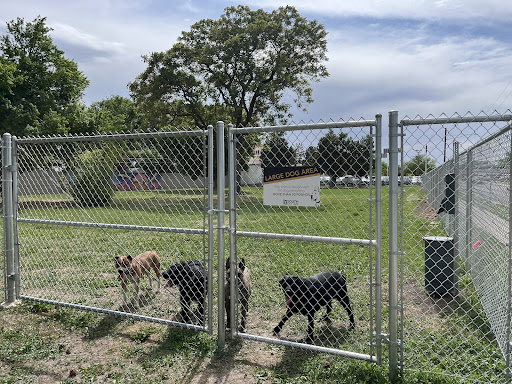
    Salt Lake City's Top Dog Parks / Cottonwood Dog Park
    Cottonwood Dog Park

    Best Dog-Friendly Hiking Trails

    Salt Lake City offers a variety of dog-friendly hiking trails for outdoor enthusiasts and their canine companions. From easy city trails to challenging canyon paths, there’s something for every skill level and preference.

    City Trails

    Salt Lake City boasts several excellent dog-friendly hiking trails within its urban industry. The Bonneville Shoreline Trail, stretching 9.1 miles from Emigration Canyon Road to City Creek, offers an easy hike with 1,466 ft of elevation gain. It’s a popular choice for dog owners, earning a 4.2-star rating. For a moderate challenge, the Ensign Ridge Trail provides a 2.8-mile out-and-back experience with 1,020 ft of elevation gain and a 4.3-star rating. The Memory Grove Trail is another fantastic option, featuring an off-leash area where dogs can run freely. This trail offers large wooded areas, open green spaces, and amenities such as walking paths, restrooms, drinking fountains, and picnic tables.

    Canyon Trails

    For those seeking more adventurous hikes, Salt Lake City’s canyon trails offer breathtaking scenery and challenging terrain. Millcreek Canyon is a paradise for dog owners, allowing off-leash dogs on odd-numbered days. The canyon features a variety of trails ranging from easy to challenging, surrounded by lush forests and streams.

    After a hike, dogs can cool off in the creek, and there are plenty of picnic spots for a well-deserved break. For a more strenuous experience, the Grandeur Peak East Trail from Church Fork offers a 5.9-mile out-and-back trail with 2,365 ft of elevation gain and a impressive 4.6-star rating. Another challenging option is the Ferguson Canyon Trail to Upper Meadow, a 4.3-mile out-and-back trail with 2,303 ft of elevation gain and a 4.2-star rating.

    Salt Lake City’s Top Dog Parks

    Salt Lake City offers a variety of excellent dog parks, many with off-leash areas, catering to different preferences and dog sizes. Here are some of the top dog parks in the city:

    1. Fairmont Dog Park
      Located at 1104 S Ashton Ave, Fairmont Dog Park is popular for its spacious, fully fenced off-leash area with separate sections for small and large dogs. It features shade, water stations (seasonal), benches, and grassy terrain great for running and playing.
    2. Lindsey Gardens Park
      At 426 M St, Lindsey Gardens offers a designated off-leash area with open grassy fields and scenic views of the Salt Lake Valley. It is known for its community vibe, picnic areas, and is wheelchair accessible.
    3. Rotary Glen Dog Park
      Located at 65 Emigration Canyon Rd, this dog park is set in a quieter, scenic area with trails and open spaces in Emigration Canyon, ideal for adventurous dogs. It has water and waste bag supplies, though bringing your own is recommended.
    4. Herman Franks Dog Park
      This well-maintained park at 1371 S 700 E has fully fenced areas separated by dog size, water fountains, shade trees, and is a favorite among local dog owners for its community feel.
    5. Cottonwood Dog Park
      Nestled within Cottonwood Park at 1580 W North Star Dr, it’s a large, fenced off-leash area with agility equipment and water stations. It’s good for training and socialization, with picnic tables and a family-friendly atmosphere.
    6. Memory Grove Park
      At 300 N Canyon Rd, it offers a designated off-leash area near City Creek Canyon with open fields and creeks for dogs to splash in seasonally. It combines natural beauty with urban convenience, though leashes are required outside specific off-leash zones.
    7. Wasatch Hollow Park
      This green space at 1650 E 1700 S includes a designated off-leash area for dogs but has restrictions in the nature preserve zone. It is quieter early in the day and offers trails and open fields for relaxed outings.
    8. Run-a-Muk Dog Park (nearby)
      Although in Park City at 3399 Olympic Pkwy, it offers 43 acres with a two-mile trail and a fully fenced area, suitable for very active dogs who want to roam freely.
    9. Dayland Dog Park (nearby)
      Located just outside Salt Lake City in Draper, it features creeks, grass, and shaded areas, ideal for water-loving dogs and those seeking a natural environment.

    For small dog owners, parks like West Jordan Dog Park and Dayland Dog Park have designated small dog areas to ensure safe play among similar-sized dogs.

    Many of these parks are wheelchair accessible and have amenities such as restrooms, picnic tables, and areas suitable for children, making them great for family outings as well. Always check individual park rules regarding leash requirements, hours, and seasonal amenities before visiting.

    This variety ensures that dog owners in Salt Lake City can find parks suited to their dogs’ energy levels, social needs, and preferences, from urban green spaces to scenic canyon retreats.

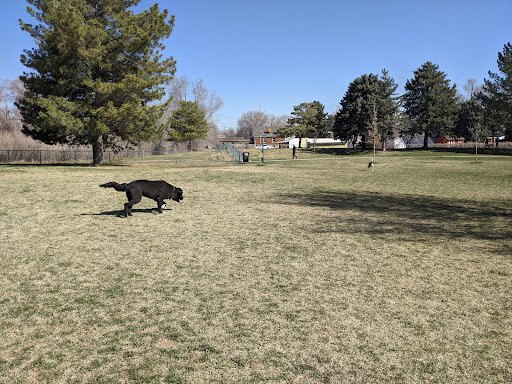
    Herman Franks Dog Park
    Herman Franks Dog Park

    Rules and Regulations for Salt Lake City Dog Parks

    Salt Lake City offers many dog parks with exact rules and regulations to ensure safety and enjoyment for all visitors. These guidelines help maintain a clean, friendly environment for both dogs and their owners.

    Off-Leash Hours and Restrictions

    Salt Lake City’s dog parks have designated off-leash areas and hours. Dogs are allowed off-leash only in exact parks, including Cottonwood Park, Fairmont Park, Freedom Trail, Herman Franks Park, Jordan Park, Lindsey Gardens, Parley’s Historic Nature Park, Pioneer Park, Rotary Glen Park, and Warm Springs Park. Some parks, like Cottonwood Park, Herman Franks Park, and Jordan Park, are fully fenced, while others may not have complete fencing.

    Time-limited off-leash areas exist in certain parks, typically operating from 5am-10am and 5pm-10pm. Jefferson Park, Parley’s Way Park, and Wasatch Hollow Park are examples of parks with these restricted hours. Most dog parks are open during daylight hours, but it’s essential to check the exact off-leash times for each location.

    Etiquette and Safety Guidelines

    When visiting Salt Lake City’s dog parks, it’s crucial to follow proper etiquette and safety guidelines. Always keep your dog under voice control and within sight. Clean up after your pet immediately, using provided waste bags and disposal bins. Ensure your dog is up-to-date on vaccinations and wearing a current license tag.

    Aggressive dogs should not be brought to the park. If your dog shows signs of aggression, remove it immediately. Children under 8 years old must be supervised by an adult at all times. Avoid bringing food into the off-leash areas to prevent conflicts between dogs.

    Respect the park’s capacity limits and don’t overcrowd the area. During busy times, limit your visit to allow others to enjoy the park. Always carry a leash with you, even in off-leash areas, in case of emergencies or when exiting the park.

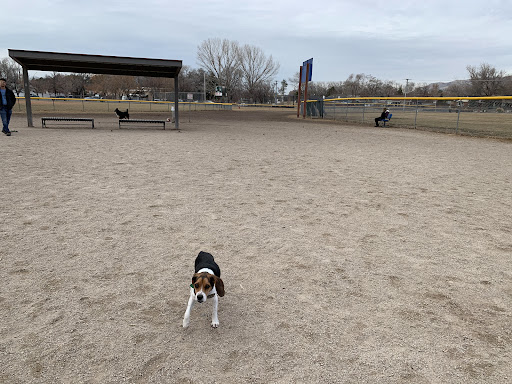
    Cottonwood Park
    Cottonwood Park

    Indoor Dog Parks in Salt Lake City

    While Salt Lake City boasts many outdoor dog parks, indoor options are limited. Currently, there’s only one facility that offers an indoor dog park experience in the area:

    Utah Dog Park, located at 1977 W North Temple St, provides a unique indoor-outdoor dog park environment. Here’s what you need to know:

    • Cost: $17 for a half-day (5 hours) or $22 for a full day
    • Monthly passes: Available for unlimited access
    • Features: Cageless doggy daycare and boarding facility
    • Play areas: Separate zones based on dogs’ activity level, age, temperament, and size
    • Socialization: Dogs are free to play and interact, except during meal and nap times
    • Location: Conveniently situated near the airport

    This facility caters to dogs of all sizes, offering distinct areas for small and large breeds, as well as spaces for senior dogs and more energetic pups. Utah Dog Park welcomes friendly dogs that get along well with both people and other canines.

    While indoor options are scarce, Salt Lake City’s climate allows for year-round use of outdoor dog parks. The city’s plans to improve off-leash areas with enhanced facilities, pet hydration stations, and sun protection will make these outdoor spaces even more appealing in the future.

    For dog owners seeking indoor alternatives during extreme weather conditions, some pet-friendly businesses and pet stores in Salt Lake City may offer indoor play areas or socialization events. It’s worth checking with local pet communities and businesses for any pop-up indoor dog park events or temporary facilities, especially during winter months.

    Swimming Spots for Dogs

    Salt Lake City offers several options for dog owners looking to give their furry friends a refreshing swim. While swimming with dogs can be challenging due to watershed rules, we’ve found some excellent spots where your canine companion can take a dip.

    Willow Creek Dog Park

    Located in Park City, Willow Creek Dog Park is a premier destination for dogs who love to swim. Though it’s a bit of a drive from Salt Lake City, this park features:

    • A fully fenced, large swimming pond specifically for dogs
    • A dock for dogs to practice jumping
    • A separate fenced dry area with basic agility gear
    • Grassy areas for drying off before heading home

    The park’s size and amenities make it an ideal spot for dogs to cool off and play in the water. It’s particularly popular during hot summer days when both dogs and their owners appreciate a refreshing swim.

    Dayland Dog Park

    While not primarily a swimming spot, Dayland Dog Park in Draper offers a small creek that runs through the park. This can be a pleasant area for dogs to cool off and play in the water. The park’s features include:

    • A fenced area with grass and gravel
    • A seasonally running creek
    • Multiple drinking fountains for dogs
    • Doggy bags for easy clean-up

    It’s important to note that Dayland Dog Park has limited shade, so we recommend visiting during cooler parts of the day and ensuring your dog stays hydrated.

    Other Parks with Water Features

    While not all parks in Salt Lake City offer swimming opportunities, some provide water features that can help keep your dog cool:

    • Cottonwood Park:
    • Dog park area
    • Doggie water fountain for hydration
    • No exact swimming spot
    • Herman Franks Park:
    • Water stations available
    • No dedicated swimming areas

    These parks, while not ideal for swimming, can still provide a refreshing experience for dogs on hot days.

    When visiting any of these locations, we recommend:

    • Bringing towels to dry off your dog after swimming or playing in water
    • Supervising your dog at all times, especially around water
    • Respecting park rules and other visitors
    • Cleaning up after your pet to maintain the cleanliness of the area

    By following these guidelines, you and your dog can enjoy a safe and fun swimming experience in and around Salt Lake City.

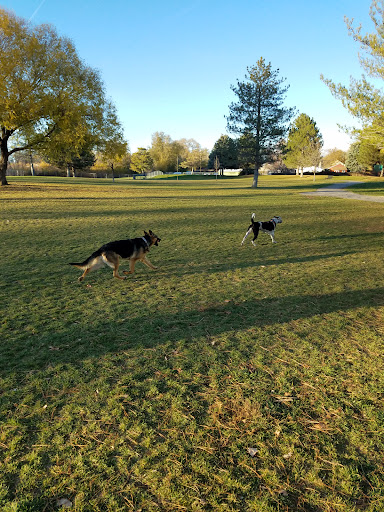
    Lindsey Gardens Park
    Lindsey Gardens Park

    Dog Park Facilities and Maintenance

    Salt Lake City offers a variety of dog parks with diverse facilities and maintenance standards. These parks cater to different needs, providing spaces for dogs to exercise, socialize, and enjoy the outdoors.

    Fenced vs. Unfenced Areas

    Salt Lake City’s dog parks feature both fenced and unfenced areas. Herman Franks Park and Jordan Park boast fully fenced off-leash areas, ensuring a secure environment for dogs to roam freely. These enclosed spaces provide peace of mind for pet owners, particularly those with energetic or easily distracted dogs. In contrast, Lindsey Gardens offers an unfenced off-leash area, allowing for a more open experience. This park requires owners to maintain strict voice control over their pets. Fenced areas typically include amenities like water stations and waste bags, while unfenced areas often integrate with larger park spaces, offering more diverse landscapes for dogs to explore.

    Waste Management and Cleanliness

    Maintaining cleanliness in Salt Lake City’s dog parks is a top priority. Parks like Herman Franks and Jordan Park are equipped with waste stations and provide poop bags to encourage responsible pet ownership. Regular maintenance schedules ensure these facilities remain clean and hygienic. Cottonwood Park, known for its lush green grass, benefits from consistent upkeep to preserve its appealing environment. Many parks feature trash cans strategically placed throughout the area, making it convenient for owners to dispose of waste properly. The city encourages a “leave no trace” policy, reminding visitors to clean up after their pets to maintain the parks’ cleanliness and safety for all users.

    Seasonal Considerations for Dog Parks

    Cottonwood Park Off-Leash Area

    Cottonwood Park, located at 1580 W North Star Dr, Salt Lake City, UT 84116, offers year-round benefits for dog owners. In summer, the park’s mature trees provide ample shade, keeping dogs cool during hot days. The abundant grass cover minimizes dust, creating a comfortable environment for both pets and their owners. During winter, these same features help reduce mud formation, making Cottonwood Park a preferred destination for dog walking even in colder months.

    Memory Grove Park

    Memory Grove Park, situated at 300 N Canyon Rd, Salt Lake City, UT 84103, presents unique seasonal challenges and opportunities. Spring visitors should exercise caution due to the high and swift water in the creek during runoff season. This natural feature, while beautiful, requires extra vigilance to ensure dogs’ safety. Summer at Memory Grove Park is particularly appealing, as the shaded areas and creek provide excellent spots for dogs to cool off during hot days.

    Herman Franks Park Off-Leash Dog Area

    Herman Franks Park, found at 1371 S 700th E, Salt Lake City, UT 84105, has exact considerations for summer visits. The gravel surface in the off-leash area can become dusty on hot days, which may be less comfortable for some dogs and their owners. To mitigate this, we recommend visiting during cooler hours of the day or bringing water to help settle the dust.

    General Seasonal Tips

    When visiting dog parks in Salt Lake City throughout the year, consider these seasonal tips:

    1. Spring: Be prepared for muddy conditions as snow melts and rain falls. Bring towels to clean your dog before heading home.
    2. Summer: Visit parks early in the morning or later in the evening to avoid peak heat. Always bring water and portable bowls for your dog.
    3. Fall: Watch for fallen leaves and debris that might hide potential hazards. The cooler temperatures make this an ideal time for longer park visits.
    4. Winter: Check park conditions before visiting, as some areas may close due to snow or ice. Dress your dog appropriately if needed, especially short-haired breeds.

    By considering these seasonal factors, dog owners can ensure safe and enjoyable visits to Salt Lake City’s dog parks year-round. Each park’s unique characteristics offer different advantages depending on the season, allowing for varied experiences throughout the year.

    Community Events at Salt Lake City Dog Parks

    Salt Lake City’s dog parks aren’t just for our four-legged friends; they’re also hubs for community gatherings and events. While the primary focus remains on providing safe, off-leash areas for dogs, some parks offer facilities that accommodate various community activities.

    Cottonwood Park Off-Leash Area

    Cottonwood Park, located at 1580 W North Star Dr, Salt Lake City, UT 84116, stands out as a versatile space for both dogs and community events. This park boasts:

    • Picnic tables and pavilions
    • Volleyball courts
    • Basketball courts
    • Restroom facilities

    These amenities make Cottonwood Park an ideal location for family gatherings and community events. The spacious layout allows for various activities while dogs enjoy the off-leash area.

    Herman Franks Park Off-Leash Dog Area

    Herman Franks Park, situated at 1371 S 700 E, Salt Lake City, UT 84105, offers a unique blend of dog-friendly spaces and community facilities:

    • Baseball fields
    • Concession stands
    • Playground area

    This combination of features makes Herman Franks Park a popular spot for local sports events and family outings. The off-leash dog area provides a space for pets to play while community members enjoy the park’s other amenities.

    Utah Dog Park Airport, A Thrive

    Organizing Community Events

    While exact regular events aren’t mentioned for these dog parks, their facilities present opportunities for community engagement. Here are potential community events that could be organized:

    1. Dog training workshops
    2. Pet adoption fairs
    3. Community picnics
    4. Local sports tournaments
    5. Family fun days

    When planning events at these parks, it’s crucial to balance the needs of dog owners with those of other community members. Organizers should coordinate with local authorities to ensure compliance with park regulations and to maintain a safe environment for all park users.

    By utilizing these multi-purpose spaces, Salt Lake City residents can foster a sense of community while enjoying time with their canine companions. The combination of off-leash areas and community facilities in these parks creates unique opportunities for social interaction and outdoor recreation.

    Conclusion

    Salt Lake City offers a wealth of options for dog owners to enjoy quality time with their furry friends. From well-maintained parks to scenic hiking trails there’s something for every pup and their human. We’ve explored the top dog parks amenities seasonal considerations and community aspects of these spaces. By following local regulations and embracing the diverse offerings Salt Lake City provides dog owners can ensure safe enjoyable experiences year-round. Whether you’re looking for a quick romp in a fenced area or an adventurous hike these dog-friendly spaces foster both canine happiness and community connections.

  • Why Dogs Bark So Loud: Understanding Your Noisy Canine Companion

    Why Dogs Bark So Loud: Understanding Your Noisy Canine Companion

    Ever wondered why your furry friend’s bark can shake the windows? We’re diving into the industry of canine communication to uncover the mysteries behind those loud woofs.

    Dogs bark far more than their wild wolf cousins, with canine vocalizations described as “hypertrophic” compared to wolves. While wolf barks make up only 2-4% of their vocal repertoire, our domesticated pals bark in many social situations. This difference isn’t just noisy – it’s a fascinating glimpse into how domestication has shaped our four-legged companions. We’ll explore why dogs bark so loudly, what they’re trying to tell us, and how we can better understand our vocal pets.

    Understanding Loud Dog Barking

    Dogs bark louder and more frequently than their wild ancestors, wolves. This hypertrophic vocalization is a result of domestication and serves various purposes in canine communication.

    Why Dogs Bark Excessively

    Dogs bark excessively due to a combination of genetic predispositions, environmental factors, and emotional states. Certain breeds, like German Shepherds and Doberman Pinschers, are genetically inclined to bark more due to their historical roles as guard dogs. Environmental influences, such as interactions with humans and other animals, shape a dog’s barking habits. Emotional triggers, including excitement, boredom, fear, and anxiety, can lead to excessive barking. For example, dogs may bark due to loneliness or a desire for interaction. Understanding these underlying causes is crucial for addressing loud barking effectively.

    Common Triggers for Loud Barking

    Several common triggers can lead to loud barking in dogs:

    1. Territorial defense: Dogs often bark to protect their perceived territory, including their home, yard, or even their owner’s car.
    2. Alarm responses: Unfamiliar sights or sounds can trigger alarm barking, regardless of the dog’s location.
    3. Attention-seeking behavior: Dogs may bark to gain attention or rewards from their owners, such as food, toys, or playtime.
    4. Greeting behavior: Excited barking when seeing people or other dogs is a common form of greeting.
    5. Separation anxiety: Dogs left alone may bark excessively due to stress or anxiety.
    6. Boredom or frustration: Lack of mental or physical stimulation can lead to excessive barking.
    7. Social facilitation: Hearing other dogs bark can trigger a dog to join in, even from a distance.
    8. Medical issues: Pain or discomfort from illness or injury can cause increased vocalization.
    9. Compulsive behavior: Some dogs develop repetitive barking habits, often accompanied by repetitive movements.
    10. Breed-exact tendencies: Certain breeds are more prone to barking than others due to their genetic makeup.

    Understanding these triggers helps dog owners identify the root cause of loud barking and develop appropriate strategies to address the behavior effectively.

    Health-Related Causes of Excessive Barking

    Excessive barking in dogs often signals underlying health issues. Understanding these causes helps pet owners address their dog’s needs effectively and improve their quality of life.

    Medical Conditions That Increase Barking

    Dogs experiencing pain or discomfort may bark excessively. Common medical conditions leading to increased vocalization include:

    • Arthritis: Joint pain can cause dogs to bark more frequently
    • Dental problems: Tooth decay or gum disease can result in painful barking
    • Injuries: Acute or chronic injuries may trigger excessive barking
    • Canine senility: Older dogs with cognitive decline often bark more
    • Brain diseases: Neurological issues can affect a dog’s barking behavior
    • Sensory changes: Age-related hearing or vision loss may increase barking

    Other health-related triggers include bee stings and ongoing pain from various sources. Senior dogs are particularly prone to these issues, as they experience changes in their perception of the environment.

    Dog Barking

    Addressing Anxiety and Fear-Based Barking

    Anxiety and fear often contribute to excessive barking in dogs. Common anxiety-related causes include:

    • Separation anxiety: Dogs bark when left alone or separated from their owners
    • Environmental changes: New surroundings or unfamiliar stimuli can trigger barking
    • Past traumatic experiences: Dogs may bark excessively due to previous negative events

    To address anxiety and fear-based barking:

    1. Identify triggers: Observe situations that cause your dog to bark excessively
    2. Desensitization: Gradually expose your dog to anxiety-inducing stimuli in a controlled manner
    3. Counterconditioning: Associate positive experiences with previously fear-inducing situations
    4. Provide a safe space: Create a comfortable area where your dog can retreat when feeling anxious
    5. Consistent routine: Maintain a predictable daily schedule to reduce stress

    Consulting a veterinarian or professional dog trainer can help develop a customized plan to address anxiety-related barking and improve your dog’s overall well-being.

    Training Techniques to Reduce Loud Barking

    Effective training techniques can significantly reduce loud barking in dogs. By implementing positive reinforcement methods and redirecting attention-seeking behavior, we can help our canine companions learn to control their vocalizations.

    Positive Reinforcement Methods

    Positive reinforcement is a powerful tool for managing loud barking. We can use rewards to encourage quiet behavior and teach our dogs when it’s appropriate to vocalize. Here are key strategies:

    • Reward quiet behavior:
    • Offer treats or praise when the dog stops barking
    • Use a “Quiet” command followed by immediate rewards
    • Gradually increase the duration of silence before rewarding
    • Teach “Speak” and “Quiet” commands:
    • Start with the “Speak” command to control barking
    • Introduce the “Quiet” command once “Speak” is mastered
    • Practice alternating between the two commands
    • Clicker training:
    • Use a clicker to mark the exact moment of desired behavior
    • Click and treat when the dog stops barking
    • Gradually increase the time between clicks and treats
    • Consistency:
    • Apply positive reinforcement techniques consistently
    • Involve all family members in the training process
    • Maintain patience and persistence for lasting results
    • Ignore attention-seeking barks:
    • Avoid eye contact, talking, or touching the dog
    • Wait for a moment of silence before giving attention
    • Reward quiet behavior with praise or treats
    • Provide alternative activities:
    • Offer puzzle toys or chew toys to keep the dog occupied
    • Engage in interactive play sessions to prevent boredom
    • Establish a routine for exercise and mental stimulation
    • Teach alternative communication methods:
    • Train the dog to use a bell or exact gesture for needs
    • Reward non-vocal communication attempts
    • Gradually phase out barking as a means of communication
    • Address underlying needs:
    • Ensure the dog’s basic needs are met (food, water, exercise)
    • Create a consistent schedule for feeding and walks
    • Provide adequate social interaction and mental stimulation
    • Use timeouts for persistent barking:
    • Calmly remove the dog from the situation
    • Place in a quiet, neutral area for a short period
    • Release and resume normal activities when quiet
    Dogs Bark

    Environmental Factors Affecting Barking Volume

    Environmental factors play a crucial role in influencing the volume and frequency of dog barking. Understanding these factors is essential for managing and reducing excessive vocalization in our canine companions.

    Impact of Living Spaces on Dog Vocalization

    Living spaces significantly affect a dog’s barking behavior. In kennel settings, noise levels can range from 85 to 122 dB, with a single dog’s bark reaching up to 100 dB. This high-noise environment often creates a self-reinforcing cycle of barking. Overcrowding and lack of control over their surroundings can lead to increased vocalization due to frustration, fear, or anxiety.

    Dogs in densely populated urban areas have more opportunities for socialization, which can trigger barking as a form of communication or territorial response. The frequent presence of intruders near a dog’s territory in urban settings may also stimulate warning barks. Also, kenneled dogs may exhibit increased barking as a way to help social behavior in an environment with limited social interaction.

    Managing External Stimuli

    Managing external stimuli is crucial for controlling barking volume. High temperatures and humidity levels can stress dogs, leading to increased vocalization. To mitigate this, we should ensure proper ventilation and temperature control in indoor spaces.

    Reducing exposure to triggering stimuli can help decrease barking. This includes:

    • Using sound-absorbing materials in kennels or indoor spaces
    • Creating visual barriers to limit dogs’ exposure to external movement
    • Providing environmental enrichment to keep dogs mentally stimulated
    • Establishing a consistent routine to reduce anxiety and uncertainty

    We can also carry out positive reinforcement techniques to reward quiet behavior and teach alternative forms of communication. By addressing the environmental factors that contribute to excessive barking, we can create a more peaceful living environment for both dogs and their human companions.

    Breed-Specific Barking Tendencies

    Dog breeds exhibit varying propensities for barking, influenced by their genetic makeup and historical roles. Understanding these tendencies helps owners choose breeds that align with their lifestyle and manage their pets’ vocal behaviors effectively.

    Naturally Vocal Dog Breeds

    Some dog breeds are inherently more prone to barking due to their original purposes or genetic traits:

    • Guard Breeds: German Shepherds, Doberman Pinschers, and Rottweilers are known for their sharp, repetitive alarm barks, intended to alert owners and deter potential threats.
    • Terrier Breeds: Yorkshire Terriers and Boston Terriers often bark frequently, stemming from their hunting and alerting instincts.
    • Small Breeds: Chihuahuas, Poodles, and Pomeranians tend to be more vocal, often captivating in attention-seeking or alerting barks.
    • Herding Breeds: Australian Shepherds and Border Collies may bark to control livestock or alert their owners to changes in their environment.

    These breeds’ barking tendencies are deeply rooted in their genetic predispositions and historical roles, making vocalization a natural part of their behavior.

    Quieter Dog Breeds for Noise-Sensitive Environments

    For those seeking less vocal companions, certain breeds are known for their quieter nature:

    • Basenji: Often called the “barkless dog,” Basenjis produce unique yodel-like sounds instead of traditional barks.
    • Greyhound: These gentle giants are typically quiet and reserved, making them excellent apartment dogs.
    • Bulldog: Known for their calm demeanor, Bulldogs are generally quiet unless provoked.
    • Cavalier King Charles Spaniel: These affectionate dogs are usually quiet and adaptable to various living situations.
    • Bernese Mountain Dog: Even though their size, these dogs are known for their gentle and quiet nature.

    While no dog is completely silent, these breeds tend to be less vocal, making them suitable for noise-sensitive environments or owners who prefer quieter companions.

    Dogs Bark

    When to Seek Professional Help

    Professional help becomes necessary when a dog’s loud barking persists even though attempts at training and management. We’ll explore two key avenues for addressing persistent barking issues: working with a dog behaviorist and seeking veterinary interventions.

    Working with a Dog Behaviorist

    Dog behaviorists specialize in understanding and modifying canine behavior patterns. They’re equipped to assess the root causes of excessive barking and develop customized strategies to address them. When working with a behaviorist, we can expect:

    1. Comprehensive behavioral assessment
    2. Identification of exact barking triggers
    3. Customized training plans
    4. Guidance on environmental modifications
    5. Strategies for managing anxiety or stress-related barking

    Behaviorists employ scientifically-backed methods to modify behavior, including desensitization and counterconditioning techniques. They’ll work closely with us to carry out consistent training routines and monitor progress over time. For complex cases involving compulsive barking or deep-seated anxiety, a Certified Applied Animal Behaviorist (CAAB) or a veterinary behaviorist may be the most appropriate choice.

    Veterinary Interventions for Persistent Barking

    When behavioral interventions alone aren’t sufficient, veterinary care may be necessary to address underlying medical issues contributing to excessive barking. Veterinarians can:

    1. Conduct thorough physical examinations
    2. Perform diagnostic tests to rule out medical conditions
    3. Prescribe medications for anxiety or pain management
    4. Recommend dietary changes or supplements
    5. Collaborate with behaviorists for a holistic approach

    Medical conditions like cognitive dysfunction, hormonal imbalances, or chronic pain can manifest as increased vocalization. Veterinarians may prescribe medications such as anxiolytics or pain relievers to manage these underlying issues. In some cases, they might recommend alternative therapies like acupuncture or physical therapy to address discomfort that may be triggering excessive barking.

    Conclusion

    Understanding why dogs bark loudly is crucial for every pet owner. We’ve explored various factors including genetics environmental influences and emotional states that contribute to excessive barking. By recognizing these triggers and implementing effective training techniques we can better manage our dogs’ vocal behaviors. Remember that each dog is unique and may require a customized approach. If persistent barking issues arise don’t hesitate to seek professional help from a veterinarian or dog behaviorist. With patience understanding and the right strategies we can foster a harmonious relationship with our canine companions while respecting both their needs and our living environment.

  • Unlock Your Dog’s Voice: Dog Talking Buttons Revolutionize Pet Communication

    Unlock Your Dog’s Voice: Dog Talking Buttons Revolutionize Pet Communication

    Have you ever wished you could have a conversation with your furry best friend? Well, dog talking buttons might just make that dream a reality. These innovative devices are revolutionizing the way we communicate with our canine companions, allowing them to “speak” using prerecorded words and phrases.

    What Are Dog Talking Buttons?

    Dog talking buttons are innovative communication tools designed to bridge the gap between humans and their canine companions. These devices are a form of augmentative and alternative communication (AAC) adapted for use with dogs. Originally developed for non-verbal individuals, these buttons have been repurposed to enable dogs to express their needs and desires more clearly to their owners.

    The buttons function as part of a soundboard system, with each button labeled with a exact word or phrase. When pressed, the button plays back a pre-recorded audio message corresponding to its label. Common words and phrases include “play,” “outside,” “eat,” and “water.” Owners record these words or phrases into each button, allowing their dogs to associate the button with the exact action or object.

    The concept behind dog talking buttons is rooted in operant conditioning, a learning process where behaviors are reinforced through rewards. Dogs learn to use these buttons through consistent training, associating the act of pressing a button with a desired outcome, such as receiving a treat or going for a walk. This process is similar to how dogs learn basic commands like “sit” or “stay.”

    As dogs become more proficient with the buttons, they can potentially learn to use a important number of words. Some reports suggest that dogs have successfully learned to use up to 50 or even over 100 different buttons, demonstrating an impressive capacity for this form of communication.

    By incorporating dog talking buttons into their daily routines, pet owners can gain deeper insights into their dogs’ needs, preferences, and even thought processes. This enhanced communication can lead to stronger bonds between dogs and their human companions, as well as potentially improve the overall well-being of the pet by allowing them to express themselves more effectively.

    The Science Behind Canine Communication

    Basis and Inspiration

    Dog talking buttons draw inspiration from Alternative and Augmentative Communication (AAC) devices, originally designed for non-verbal individuals. These innovative tools adapt AAC concepts for canine use, enabling dogs to express their needs and desires through pre-recorded words. By pressing exact buttons, dogs can communicate with their owners in a more direct and understandable way.

    Cognitive Abilities of Dogs

    Dogs possess remarkable cognitive abilities that make them suitable candidates for using talking buttons. Research has shown that dogs can understand a important number of words and gestures. For example, psychologist John W. Pilley’s studies demonstrated that dogs can learn the names of many objects and comprehend simple sentences. This cognitive capacity forms the foundation for their ability to use talking buttons effectively.

    How the Buttons Work

    Dog talking buttons are typically arranged in a exact pattern to help easier learning and use. One popular arrangement is the Fitzgerald Key, used in systems like FluentPet. This organizational method categorizes words into groups such as:

    • Subjects
    • Objects
    • Places
    • Actions
    • Descriptors
    • Social interactions

    By structuring the buttons in this way, dogs can more easily navigate and select the appropriate words to communicate their thoughts and needs.

    The Role of Operant Conditioning

    Operant conditioning plays a crucial role in teaching dogs to use talking buttons. This learning process involves:

    1. Associating button presses with exact outcomes
    2. Reinforcing desired behaviors through rewards
    3. Gradually increasing the complexity of communication

    Through consistent training and positive reinforcement, dogs learn to associate pressing a button with a particular action, object, or concept.

    Analyzing Dog Communication Patterns

    Researchers are actively studying the effectiveness and implications of dog talking buttons. Federico Rossan, director of the Comparative Cognition Lab at UC San Diego, is leading a large-scale project to analyze results from dogs using these devices. This independent study aims to provide insights into the extent to which dogs can express themselves using language-like communication.

    Potential Benefits and Limitations

    While dog talking buttons offer exciting possibilities for enhanced communication between humans and their canine companions, it’s essential to consider both the potential benefits and limitations:

    Benefits:

    • Improved understanding of dogs’ needs and desires
    • Enhanced bonding between dogs and their owners
    • Potential for early detection of health issues or discomfort

    Limitations:

    • Possibility of dogs responding to owner body language rather than truly understanding the buttons
    • Variability in individual dogs’ ability to learn and use the buttons effectively
    • Need for consistent training and reinforcement

    Future Research and Applications

    As the field of canine communication using talking buttons continues to evolve, future research may focus on:

    1. Long-term effects of using talking buttons on dog behavior and cognition
    2. Potential applications in veterinary care and animal behavior studies
    3. Developing more advanced communication systems for dogs and other animals

    By exploring these areas, we can gain a deeper understanding of canine cognition and potentially revolutionize the way we interact with our furry companions.

    Dog Talking Buttons

    Benefits and Limitations of Talking Buttons for Dogs

    Advantages of Using Dog Talking Buttons

    Enhanced Communication

    Dog talking buttons offer a unique way for our canine companions to express their needs and desires more clearly. By using these buttons, dogs can indicate exact wants, such as going “outside” or needing “food.” This improved communication method helps reduce misunderstandings between pets and their owners, providing clearer insights into a dog’s needs and feelings.

    Mental Stimulation

    Using talking buttons serves as an excellent form of mental enrichment for dogs. The process of learning and using these buttons keeps their minds sharp and engaged. This mental stimulation is particularly beneficial for aging dogs, as it may help slow down cognitive decline.

    Strengthened Bond

    The process of training and interacting with talking buttons can significantly strengthen the bond between dogs and their owners. As we work together to establish this new form of communication, we create opportunities for deeper empathetic connections with our pets.

    Increased Engagement and Fun

    Incorporating talking buttons into our daily routines adds a new layer of interaction and entertainment to the pet-owning experience. It’s not just beneficial for the dogs; it’s also enjoyable for us as owners to discover new ways of communicating with our furry friends.

    Potential Drawbacks and Limitations

    Individual Variability

    It’s important to recognize that not all dogs will show the same level of interest or aptitude for using talking buttons. Some dogs may quickly grasp the concept, while others might struggle or show little interest. This variability means that the effectiveness of talking buttons can differ significantly from one dog to another.

    Training Commitment

    Teaching dogs to use talking buttons requires consistent training and patience. We need to invest time and effort in daily training sessions to help our dogs associate the buttons with exact actions or needs. This commitment may be challenging for some pet owners with busy schedules.

    Potential for Misinterpretation

    While talking buttons can enhance communication, there’s always a risk of misinterpreting a dog’s intentions. We must be cautious not to project human-like thought processes onto our dogs or assume they’re using the buttons in the same way humans would use language.

    Dog Talking Buttons

    Overreliance on Buttons

    There’s a potential risk of becoming overly reliant on the buttons for communication. It’s crucial to remember that dogs have many other ways of communicating their needs and emotions, such as body language and vocalizations. We shouldn’t neglect these natural forms of communication in favor of the buttons.

    Cost and Setup

    Implementing a talking button system can be costly, especially if opting for more advanced setups with multiple buttons. Also, the initial setup and organization of the buttons require thought and planning to ensure they’re accessible and meaningful for our dogs.

    By understanding both the benefits and limitations of dog talking buttons, we can make informed decisions about whether to incorporate them into our pets’ lives. While they offer exciting possibilities for enhanced communication, it’s essential to approach their use with realistic expectations and a commitment to ongoing training and observation.

    Choosing the Right Talking Buttons

    When selecting dog talking buttons, it’s crucial to consider several factors to ensure you choose the best set for your furry friend. We’ll explore the key aspects to keep in mind when making your decision.

    Types and Features of Talking Buttons

    Dog talking buttons come in various types, each with unique features:

    • Recordable Buttons: These allow you to record exact words or phrases, such as “food,” “outside,” or “play.” They typically have built-in speakers for clear playback and run on batteries.
    • Customization Options: Many sets use a hexagon-shaped tile arrangement that organizes buttons by word category. This system makes it easier for dogs to learn and remember button locations.
    • Durability: Look for buttons made from high-quality, sturdy materials that can withstand repeated use. Waterproof mats and buttons are beneficial for maintaining organization and hygiene.

    Considering Your Dog’s Needs

    When choosing talking buttons, consider your dog’s exact requirements:

    • Sound Level: Dogs with hearing issues may need buttons that project sound clearly.
    • Number of Buttons: If you want to teach your dog a select number of phrases, a few buttons might be ideal rather than a whole set.
    • Button Size: Consider your dog’s paw size when selecting buttons to ensure easy pressing.

    Ease of Use and Setup

    The best dog talking buttons are easy to set up and use:

    • Non-Slip Design: Look for buttons with non-slip bases to prevent sliding during use.
    • Organization System: Choose sets that offer a way to keep buttons organized, such as non-slip tiles or mats.
    • Battery Life: Consider the battery life of the buttons, as frequent replacements can be inconvenient.

    Training Resources and Support

    Some button sets come with additional resources to help you and your dog get started:

    • Training Programs: Look for sets that offer training guidance, such as the “Talk to the Beans” method.
    • Online Resources: Access to websites with peer-reviewed research and links to button users on social media can be valuable.
    • Community Support: Some brands offer forums or groups where users can share experiences and tips.

    By considering these factors, we can choose the most suitable talking buttons for our dogs, improving communication and strengthening our bond with our pets.

    Dog Talking Buttons

    How to Train Your Dog to Use Talking Buttons

    Training dogs to use talking buttons requires patience, consistency, and a structured approach. We’ll guide you through the process, starting with vocal commands and progressing to button use.

    Starting with Vocal Commands

    Teaching vocal commands lays the foundation for successful button training. We recommend:

    • Selecting familiar words your dog already associates with actions or objects (e.g., “Walk,” “Treat,” “Outside,” “Play”)
    • Using consistent words for exact actions or objects
    • Emphasizing positive associations to motivate engagement
    • Pairing words with actions consistently (e.g., saying “Walk” every time you take your dog out)
    • Reinforcing correct responses with treats or praise
    • Practicing commands in short, frequent sessions throughout the day
    • Gradually increasing the difficulty of commands as your dog progresses

    By establishing a strong verbal foundation, you’ll prepare your dog for the next step: introducing the talking buttons.

    Introducing the Buttons

    Once your dog understands vocal commands, it’s time to incorporate the talking buttons:

    1. Start with one button for a high-value word (e.g., “Treat” or “Outside”)
    2. Place the button in an easily accessible location
    3. Demonstrate button use by pressing it and immediately performing the associated action
    4. Guide your dog’s paw to press the button, followed by the action
    5. Reward successful button presses with treats and praise
    6. Practice regularly, incorporating button use into daily routines
    7. Be patient and consistent, allowing your dog time to make the connection
    8. Gradually reduce physical guidance as your dog learns to press independently
    9. Introduce new buttons one at a time, ensuring mastery before adding more

    Remember, each dog learns at their own pace. Celebrate small victories and maintain a positive training environment.

    Expanding the Vocabulary

    As your dog becomes comfortable using initial buttons, you can expand their vocabulary:

    1. Introduce new buttons gradually, one at a time
    2. Choose words relevant to your dog’s daily life and interests
    3. Use a consistent layout for button placement (e.g., Fitzgerald Key)
    4. Practice combining buttons to form simple phrases (e.g., “Outside play”)
    5. Encourage spontaneous use by responding promptly to button presses
    6. Introduce abstract concepts slowly (e.g., “Help,” “Love”)
    7. Monitor your dog’s progress and adjust training as needed
    8. Be patient and allow time for your dog to explore and experiment
    9. Celebrate new word acquisitions and creative button use

    Remember, the goal is to enhance communication, not replace other forms of interaction. Continue to observe your dog’s body language and vocalizations alongside button use for a comprehensive understanding of their needs and desires.

    Best Practices for Using Dog Talking Buttons

    To maximize the effectiveness of dog talking buttons, it’s crucial to follow proven best practices. These guidelines ensure that both dogs and their owners can make the most of this communication tool.

    Placement and Organization

    The strategic placement and organization of dog talking buttons significantly impact their effectiveness. Arrange the buttons in a logical, consistent manner that’s easy for your dog to navigate. Group related words together, such as “play,” “outside,” and “walk,” to help your dog understand the context better. Place the buttons in an easily accessible location where your dog spends most of its time, avoiding areas that might overwhelm or distract them. A dedicated area in the home works well for many dogs. Consider using a non-slip mat or tile to keep the buttons organized and prevent them from sliding around, making it easier for your dog to press the desired button.

    Consistency and Patience

    Consistency is key when training a dog to use talking buttons. Use the same words and phrases each time you record the buttons to avoid confusion. For example, if a button is labeled “outside,” it should always mean the same thing and lead to the same outcome. Be patient with your dog as they learn to use the buttons, as each dog may progress at a different pace. Celebrate small victories and maintain a positive training environment. Consistently respond to your dog’s button presses, reinforcing the connection between the button and the desired action. Remember that learning to use dog talking buttons is a process that requires time and dedication from both you and your pet.

    Interpreting Your Dog’s Button Use

    Understanding your dog’s communication through talking buttons requires careful observation and interpretation. We’ll explore key aspects of decoding your dog’s button interactions to enhance your understanding of their needs and desires.

    Recognizing Patterns

    Dogs often develop patterns in their button use, providing valuable insights into their thought processes. We’ve observed that many dogs press buttons in exact sequences or at particular times of day. For example:

    • Morning button presses might include “outside,” “eat,” and “play”
    • Evening sequences could involve “cuddle,” “toy,” and “treat”

    Recognizing these patterns helps anticipate your dog’s needs and reinforces the connection between their button presses and real-industry outcomes.

    Context is Key

    Interpreting your dog’s button use goes beyond simply listening to the words. We emphasize the importance of considering the context in which your dog presses the buttons. Factors to consider include:

    • Time of day
    • Recent activities
    • Environmental stimuli
    • Your dog’s body language

    For instance, if your dog presses “water” after returning from a walk, it’s likely they’re thirsty. But, if they press “water” while staring out the window, they might be referring to rain or wanting to play with the sprinkler.

    Distinguishing Intentional vs. Accidental Presses

    As your dog learns to use talking buttons, it’s crucial to differentiate between intentional communication and accidental presses. Signs of intentional button use include:

    • Direct eye contact before or after pressing
    • Waiting for a response
    • Repeated presses if no action is taken
    • Consistent use of exact buttons in relevant situations

    Accidental presses often occur when dogs walk over buttons or play near them. These typically lack the focused attention seen with intentional communication.

    Interpreting Complex Combinations

    As dogs become more proficient with talking buttons, they may start using multiple buttons to express more complex ideas. We’ve seen examples of dogs combining buttons in creative ways:

    • “Play” + “Outside” = Request for outdoor playtime
    • “Eat” + “Later” = Expressing they’re not hungry now
    • “Mom” + “Dad” + “Where” = Asking about a parent’s location

    These combinations demonstrate the potential for more nuanced communication through talking buttons.

    Recognizing Emotional States

    While it’s challenging for dogs to express abstract emotions directly, their button use can provide clues about their emotional state. We’ve noticed that:

    • Rapid, repeated presses might indicate urgency or frustration
    • Hesitation before pressing could suggest uncertainty
    • Alternating between multiple buttons may show indecision or a complex need

    By observing these subtle cues, you can gain insights into your dog’s emotional well-being and respond appropriately.

    Adapting to Individual Communication Styles

    Every dog develops their unique communication style with talking buttons. Some may be more verbose, using multiple buttons frequently, while others might be more selective in their button use. We encourage pet owners to:

    • Observe their dog’s preferred communication methods
    • Adjust button placement and vocabulary based on individual needs
    • Remain patient as their dog’s communication style evolves

    Understanding and adapting to your dog’s individual style enhances the effectiveness of button communication.

    Addressing Misinterpretations

    Misinterpretations can occur when interpreting your dog’s button use. Common scenarios include:

    • Pressing buttons randomly out of boredom
    • Using buttons for attention rather than exact needs
    • Associating buttons with unintended outcomes

    When misinterpretations happen, we recommend:

    1. Reassessing the button’s placement and context
    2. Reviewing your response to button presses
    3. Considering additional training or adjustments to your approach

    By addressing misinterpretations promptly, you maintain the integrity of the communication system.

    Tracking Progress and Evolution

    Monitoring your dog’s progress with talking buttons provides valuable insights into their learning and communication development. We suggest:

    • Keeping a log of new buttons introduced and when they’re first used correctly
    • Noting changes in button use frequency and combinations over time
    • Recording any novel or unexpected uses of buttons

    This tracking helps identify areas for improvement and celebrates your dog’s communication milestones.

    Balancing Button Use with Other Forms of Communication

    While talking buttons offer exciting communication possibilities, it’s essential to maintain a balance with other forms of interaction. We emphasize the importance of:

    • Continuing to respond to your dog’s body language and vocalizations
    • Captivating in regular play and training sessions without buttons
    • Using buttons as a supplement to, not a replacement for, traditional communication

    This balanced approach ensures a well-rounded communication system between you and your dog.

    By carefully interpreting your dog’s button use and considering these various aspects, you can develop a deeper understanding of your pet’s needs and desires. Remember that each dog’s journey with talking buttons is unique, and patience and consistency are key to successful communication.

    Potential Challenges and Misconceptions

    While dog talking buttons offer exciting possibilities for enhanced communication, it’s crucial to understand the potential challenges and misconceptions associated with their use. By addressing these issues, we can set realistic expectations and maximize the benefits of this innovative tool.

    Limitations of Comprehension

    Dog talking buttons have shown promise in facilitating communication, but it’s important to recognize their limitations. Studies, such as the one published in PLOS ONE by researchers from the University of California, San Diego, have demonstrated that dogs can comprehend exact words associated with these buttons. But, the extent of this comprehension remains a subject of debate.

    Research indicates that dogs respond appropriately to words like “play” and “outside” when triggered by button presses. Yet, it’s unclear whether this comprehension goes beyond simple associative learning. The question of whether dogs can use these buttons in a more complex, wordlike manner, such as forming sentences, is still under investigation by researchers like Federico Rossano.

    Associative Learning vs. Language Acquisition

    One common misconception is that dogs using talking buttons are acquiring language in the same way humans do. In reality, the process is more akin to associative learning, where dogs link exact button presses to desired outcomes or actions. This distinction is crucial for setting appropriate expectations and interpreting a dog’s button use accurately.

    Individual Variability

    Not all dogs show equal interest or aptitude for using talking buttons. Factors such as breed, age, temperament, and previous training experiences can significantly influence a dog’s ability to learn and use this communication method. Some dogs may quickly grasp the concept, while others might show little interest or struggle to make connections.

    Training Commitment

    Successfully implementing dog talking buttons requires a substantial time commitment and consistent training efforts. Owners must be prepared to invest time in teaching their dogs how to use the buttons, reinforcing desired behaviors, and expanding their vocabulary over time. This ongoing process demands patience and dedication.

    Misinterpretation Risks

    There’s a potential risk of misinterpreting a dog’s intentions when using talking buttons. While dogs may learn to associate certain buttons with exact outcomes, their understanding of abstract concepts or complex ideas remains limited. Owners should be cautious about attributing human-like thought processes or intentions to their dog’s button presses.

    Overreliance on Buttons

    As dog talking buttons gain popularity, there’s a risk of overreliance on this form of communication. It’s essential to remember that these buttons should supplement, not replace, other forms of interaction and communication with our canine companions. Traditional methods of understanding dog behavior, body language, and vocalizations remain crucial.

    Cost Considerations

    Implementing a dog talking button system can involve important upfront costs. High-quality buttons, durable mats, and associated training materials may represent a substantial investment. Also, ongoing costs for maintenance or replacement of damaged buttons should be considered.

    Technological Limitations

    Current dog talking button systems have technological limitations. Most rely on pre-recorded audio messages, which may not capture the full range of a dog’s needs or desires. Future advancements in AI and language processing may address these limitations, but for now, the technology remains relatively simple.

    Scientific Skepticism

    While anecdotal evidence and some studies support the effectiveness of dog talking buttons, the scientific community remains divided. More rigorous, long-term studies are needed to fully understand the implications and effectiveness of this communication method. As research continues, our understanding of the potential and limitations of dog talking buttons will likely evolve.

    Ethical Considerations

    The use of dog talking buttons raises ethical questions about the extent to which we should attempt to “humanize” our pets’ communication. There’s ongoing debate about whether this approach respects dogs’ natural communication methods or imposes human expectations on their behavior.

    By acknowledging these potential challenges and misconceptions, we can approach the use of dog talking buttons with a balanced perspective. This understanding allows us to harness the benefits of this innovative tool while maintaining realistic expectations and respecting our dogs’ natural communication abilities.

    Conclusion

    Dog talking buttons offer an exciting new way to connect with our canine companions. While they present unique opportunities for enhanced communication and bonding they’re not without challenges. As we explore this innovative tool it’s crucial to maintain realistic expectations and respect our dogs’ natural communication abilities. With patience consistency and a balanced approach we can unlock new dimensions in our relationships with our furry friends. As research progresses we’ll gain deeper insights into the long-term effects and potential applications of this technology potentially revolutionizing how we interact with and understand our beloved pets.

  • Spay a Dog: 2025 Cost Guide & Recovery Timeline | What to Expect

    Spay a Dog: 2025 Cost Guide & Recovery Timeline | What to Expect

    Spaying your dog is a crucial decision that affects both your pet’s health and your wallet. But how much does it really cost to spay a dog? We’ve researched this important topic to help you understand the financial implications and benefits of this common procedure.

    The cost of spaying a dog can vary widely, typically ranging from $200 to $700. Factors such as your location, your dog’s size, and her health status all play a role in determining the final price. While this may seem expensive, it’s important to consider the long-term health benefits and potential cost savings. Spaying reduces the risk of certain cancers and infections, which could save you thousands in veterinary bills down the road.

    In this text, we’ll break down the costs associated with spaying, explore low-cost options, and discuss why this procedure is a worthwhile investment in your dog’s health. We’ll also provide tips on how to make spaying more affordable without compromising your pet’s well-being.

    Understanding Spay a Dog

    Spaying is a crucial aspect of responsible pet ownership. We’ll explore what spaying entails and how it differs from neutering, helping you make informed decisions about your dog’s health.

    What Is Spaying?

    Spaying, also known as ovariohysterectomy, is a surgical procedure that removes a female dog’s reproductive organs. This operation involves the complete removal of the uterus, ovaries, and fallopian tubes. The process eliminates a dog’s ability to reproduce and stops her heat cycles permanently.

    During the procedure, a veterinary surgeon makes an incision on the lower portion of the abdomen to access these organs. Some surgeons use internal, dissolvable sutures, while others opt for non-dissolvable stitches that require removal 10-14 days post-surgery. Mild bruising around the incision site is normal, and the wound typically heals with minimal scarring.

    Spaying vs. Neutering

    While both spaying and neutering are sterilization procedures, they differ in several key aspects:

    1. Target: Spaying is for female dogs, while neutering is for males.
    2. Organs removed: Spaying removes the ovaries, fallopian tubes, and uterus. Neutering removes the testicles.
    3. Complexity: Spaying is more invasive and complex, requiring a larger incision and manipulation of internal organs.
    4. Duration: Spay surgery typically takes longer than neutering.
    5. Cost: Due to its complexity, spaying is generally more expensive than neutering.
    6. Recovery: Both procedures require about 10-14 days of limited activity for proper healing.
    7. Hormonal effects: Spaying reduces estrogen and progesterone levels, while neutering decreases testosterone.

    Both surgeries are routine and safe, especially for younger dogs. But, it’s essential to consult with a veterinarian to determine the best timing and approach for your exact pet.

    Average Cost of Spaying a Dog

    The cost of spaying a dog varies widely, typically ranging from $200 to $700. This price range reflects the differences in veterinary practices, geographical locations, and individual dog characteristics.

    Cost Factors

    Several factors influence the cost of spaying a dog:

    • Dog’s size: Larger dogs require more anesthesia and surgical supplies, increasing the cost.
    • Age: Older dogs or those with multiple heat cycles may incur higher costs due to surgical complexity.
    • Health status: Pre-existing conditions, pregnancy, or being in heat can raise the price.
    • Location: Veterinary costs vary by region and between urban and rural areas.
    • Facility type: Private practices generally charge more than low-cost clinics or humane societies.
    • Additional services: Pre-operative blood work, pain medication, or post-operative care can add to the total cost.

    Understanding these factors helps pet owners anticipate and budget for the procedure more effectively.

    Breakdown of Procedure Expenses

    The cost of spaying a dog includes various components:

    • Anesthesia: Covers the drugs and monitoring equipment used during surgery.
    • Surgical fees: Includes the veterinarian’s time and expertise.
    • Facility costs: Covers the use of the operating room and recovery area.
    • Medical supplies: Includes surgical instruments, sutures, and sterilization materials.
    • Pre-operative exams: May involve physical examinations and blood tests.
    • Post-operative care: Includes pain medication and follow-up visits.
    • Overnight stay: Some clinics may require an overnight stay for observation.

    Low-cost clinics often offer basic packages, while private practices may provide more comprehensive care options. It’s essential to discuss the full breakdown of expenses with your veterinarian to understand what’s included in the quoted price.

    Where to Get Your Dog Spayed

    Getting your dog spayed is an important decision, and choosing the right place for the procedure is crucial. We’ll explore two main options for spaying your dog: veterinary clinics and low-cost spay programs.

    Veterinary Clinics

    Veterinary clinics offer professional and comprehensive care for dog spaying procedures. These facilities are equipped with state-of-the-art medical equipment and staffed by experienced veterinarians. Private veterinary practices typically charge between $400 and $700 for spaying, depending on factors such as the dog’s size, age, and health status.

    Advantages of choosing a veterinary clinic include:

    • Personalized care customized to your dog’s exact needs
    • Access to advanced medical technology
    • Comprehensive pre-operative exams and post-operative care
    • Established relationship with your regular veterinarian

    When selecting a veterinary clinic, consider:

    • The clinic’s reputation and experience with spaying procedures
    • Availability of payment plans to manage costs
    • Quality of post-operative care and follow-up appointments

    Low-Cost Spay Programs

    Low-cost spay programs provide affordable options for dog owners, with prices ranging from $40 to $300. These programs are often offered by:

    • Humane societies
    • Animal shelters
    • Non-profit organizations
    • Some veterinary schools

    Benefits of low-cost spay programs include:

    • Significantly reduced prices compared to private clinics
    • Professional care from trained veterinarians
    • Accessibility for pet owners on a tight budget

    When considering a low-cost program, keep in mind:

    • Services may be limited to basic spaying without additional tests or treatments
    • Wait times might be longer due to high demand
    • Eligibility may be based on income or location

    To find low-cost spay programs in your area:

    • Contact local animal shelters or humane societies
    • Check with your state or county for population control initiatives
    • Inquire at nearby veterinary schools about their clinic services

    Remember, “low-cost” doesn’t mean low-quality. These programs often employ highly trained staff and maintain efficient practices to keep costs down while providing essential care.

    Benefits of Spaying Your Dog

    Spaying your dog offers many advantages for both your pet and your household. Let’s explore the health and behavioral benefits of this important procedure.

    Health Advantages

    Spaying significantly reduces the risk of several health issues in female dogs. It eliminates the possibility of pyometra, a life-threatening uterine infection that affects 1 in 4 unspayed females. The procedure also decreases the risk of mammary tumors by 34% when performed before the first heat cycle. Spayed dogs have a lower chance of developing ovarian and uterine cancers, which can be costly to treat. Also, spaying prevents unwanted pregnancies, reducing the strain on a dog’s body and eliminating complications associated with pregnancy and whelping. By opting for spaying, you’re investing in your dog’s long-term health and potentially saving on future veterinary expenses.

    Spay a Dog

    Behavioral Improvements

    Spaying can lead to positive changes in your dog’s behavior. The procedure eliminates heat cycles, which occur every six months and can last up to three weeks. This means no more messy discharge or the need for special garments during these periods. Spayed dogs typically show reduced anxiety and restlessness associated with hormonal fluctuations. They’re less likely to exhibit behaviors like excessive vocalization or attempts to escape in search of a mate. The absence of heat cycles also decreases the likelihood of unwanted male dog attention, potentially reducing the risk of fights or injuries. While spaying doesn’t change a dog’s fundamental personality, it can help create a calmer, more balanced pet that’s easier to manage and train.

    Preparing for the Spay Procedure

    Preparing for your dog’s spay procedure involves careful planning and consideration. We’ll guide you through the ideal age for spaying and important pre-surgery considerations to ensure the best outcome for your furry friend.

    Ideal Age for Spaying

    The ideal age for spaying a dog depends on her size and breed. For dogs weighing less than 45 pounds as adults, spaying before the first heat cycle (around 5-6 months old) is recommended. This timing reduces the risk of mammary cancer from 23-34% to just 0.5%. Larger breeds (over 45 pounds) require more careful consideration. While spaying after the first heat increases mammary cancer risk to 8%, and after the second heat to 26%, early spaying in large breeds may lead to orthopedic problems and urinary incontinence. We advise consulting with a veterinarian to determine the best timing for your exact dog, balancing cancer prevention with potential orthopedic concerns.

    Pre-Surgery Considerations

    Before your dog’s spay procedure, several important factors need attention. First, schedule a pre-operative appointment with your veterinarian. This exam ensures your dog is healthy enough for surgery and can handle anesthesia. Bloodwork is often performed to check organ function and detect any underlying health issues. We recommend discussing any current medications or supplements your dog is taking, as some may need to be adjusted before surgery.

    Spay a Dog

    It’s crucial to follow your vet’s instructions about food and water intake before the procedure – typically, fasting is required for 8-12 hours before surgery. Prepare a quiet, comfortable recovery area at home for your dog’s post-operative care. Gather any prescribed medications and special food in advance. Finally, arrange transportation to and from the veterinary clinic, as your dog won’t be able to walk home after the procedure.

    Post-Spay Care and Recovery

    Proper post-operative care is crucial for a dog’s smooth recovery after spaying. Here’s what to expect and how to provide the best care for your furry friend during this period.

    What to Expect After Surgery

    After spaying, dogs typically need 10 to 14 days for full recovery. Your pet may regain energy quickly, but it’s essential to restrict activity to prevent incision damage. Here’s what to expect:

    • Leashed outdoor activities only
    • No running, jumping, or playing during recovery
    • Mild swelling or bruising at the incision site (resolves in a few days)
    • Use of a cone collar or bodysuit to prevent licking
    • Pain medications for comfort

    For high-energy puppies, prescription calming medications can help manage exercise and potty time. Avoid bathing your dog for at least 10 days post-surgery or until the incision heals completely.

    Monitor the incision site daily. Contact your vet if you notice persistent redness, discharge, foul odor, or increased swelling.

    Follow-Up Care

    Proper follow-up care ensures a smooth recovery for your spayed dog:

    • Administer pain medications as prescribed
    • Keep the incision area clean and dry
    • Prevent your dog from licking or biting the incision
    • Limit physical activity for 10-14 days
    • Provide a quiet, comfortable recovery space
    • Offer small amounts of water and food as directed by your vet
    • Attend all scheduled post-operative check-ups

    For dogs with non-dissolvable sutures, schedule a follow-up appointment for removal approximately 10-14 days after surgery. During recovery, watch for signs of complications such as lethargy, loss of appetite, vomiting, or diarrhea. If these symptoms occur, contact your veterinarian immediately.

    Remember, each dog’s recovery may vary. Always follow your veterinarian’s exact post-operative instructions for the best outcomes.

    Financial Assistance Options

    Spaying a dog can be a important expense, but there are several financial assistance options available to help pet owners manage the cost. These options can make the procedure more affordable and accessible for many dog owners.

    Pet Insurance Coverage

    Pet insurance typically doesn’t cover spaying as it’s considered an elective procedure. But, some providers offer wellness plans that include coverage for spay surgeries. These plans often provide a stipend towards the cost of spaying, which can significantly reduce out-of-pocket expenses. It’s important to carefully review the terms of any insurance plan, as there may be waiting periods or exact conditions for coverage. While pet insurance with wellness add-ons can be beneficial, it’s crucial to compare the long-term costs with the potential savings on spay surgery and other routine care.

    Low-Cost Clinics and Programs

    Many organizations offer low-cost spay services to make the procedure more accessible. These options include:

    • Non-profit veterinary clinics: Charge between $25 and $350 for spaying
    • State voucher programs: Can reduce costs to around $100 or less
    • Animal shelters and humane societies: Often provide discounted spay services
    • ASPCA and other national organizations: May offer free or reduced-cost spaying

    Several states have referral programs for affordable spay/neuter services, including West Virginia, Alabama, Connecticut, Delaware, Illinois, Maine, Oregon, Michigan, Florida, Vermont, and Tennessee. While these low-cost options can significantly reduce expenses, it’s essential to verify the level of post-operative care provided. Some clinics may offer limited services compared to private practices, so it’s crucial to understand the care your dog will receive before proceeding.

    Conclusion

    Spaying your dog is a crucial investment in their health and well-being. While costs can vary we’ve shown that affordable options exist. By understanding the procedure exploring low-cost alternatives and preparing properly you’ll be well-equipped to make the best decision for your furry friend. Remember the long-term benefits of spaying far outweigh the initial costs. It’s not just about preventing unwanted litters but also about ensuring a healthier happier life for your beloved pet.

  • Unlock Your Dog’s Potential: Master Dog Clicker Training for Fast Results

    Unlock Your Dog’s Potential: Master Dog Clicker Training for Fast Results

    Are you struggling to train your furry friend? A dog clicker might be the game-changer you’ve been looking for. This simple yet effective tool has revolutionized pet training, making it easier and more enjoyable for both dogs and their owners.

    We’ve all been there – trying to teach our pups new tricks or behaviors, only to end up frustrated. That’s where the dog clicker comes in. Based on positive reinforcement, this scientifically-proven method allows us to precisely mark desired behaviors, making it crystal clear to our canine companions what we’re asking of them. With a dog clicker, we can transform training sessions into fun, rewarding experiences that strengthen the bond between us and our four-legged friends.

    What Is a Dog Clicker?

    A dog clicker is a small handheld device used in positive reinforcement training for dogs. It produces a distinct, consistent clicking sound when pressed, serving as a marker to indicate the exact moment a dog performs a desired behavior. This audible cue is immediately followed by a reward, typically a treat or toy, creating a strong association between the behavior and the positive outcome.

    How It Works

    Clicker training operates on the principles of operant and classical conditioning:

    1. Marker signal: The click sound acts as a precise marker, pinpointing the desired behavior.
    2. Reward association: The dog learns to associate the click with a reward.
    3. Behavior reinforcement: The dog repeats the behavior to receive the reward.

    This training method allows for clear communication between the handler and the dog, eliminating confusion and improving the learning process.

    Mechanism of Action

    The effectiveness of clicker training is rooted in two psychological processes:

    1. Classical conditioning: The dog learns to associate the click sound with a reward, creating a conditioned response.
    2. Operant conditioning: As training progresses, the dog learns to repeat behaviors that result in the click-reward sequence.

    This combination of conditioning techniques makes clicker training a powerful tool for shaping and reinforcing desired behaviors in dogs.

    1. Precision: The click marks the exact moment of correct behavior, providing clear feedback.
    2. Consistency: The sound is always the same, unlike verbal praise which can vary in tone.
    3. Timing: Allows for quick marking of behaviors, even at a distance.
    4. Versatility: Can be used to train a wide range of behaviors and commands.
    5. Positive approach: Focuses on rewarding good behavior rather than punishing mistakes.

    By using a dog clicker, trainers and pet owners can effectively communicate with their dogs, making the training process more efficient and enjoyable for both parties.

    The Science Behind Clicker Training

    Operant and Classical Conditioning

    Clicker training for dogs is rooted in two fundamental principles of behavioral psychology: operant and classical conditioning. These scientific concepts form the backbone of this effective training method.

    Classical conditioning, discovered by Ivan Pavlov, involves forming associations between stimuli. In clicker training, we pair the initially neutral click sound with a reward, typically food. Through repetition, dogs learn to associate the click with a positive outcome.

    Operant conditioning, on the other hand, focuses on the relationship between behaviors and their consequences. We use the clicker to mark the precise moment a dog performs a desired action. This immediate feedback helps the dog understand which behavior led to the reward, increasing the likelihood of that behavior being repeated.

    Positive Reinforcement

    Clicker training relies heavily on positive reinforcement. This approach focuses on rewarding desired behaviors rather than punishing unwanted ones. When we click and treat immediately after a dog performs a desired action, we’re reinforcing that behavior.

    Positive reinforcement has several advantages:

    Timing and Precision

    The clicker’s unique advantage lies in its ability to mark behaviors with pinpoint accuracy. The distinct click sound allows us to capture the exact moment a dog performs a desired action, even before we can deliver a treat.

    This precision in timing is crucial because:

    • It clarifies which exact behavior is being rewarded
    • It reduces confusion for the dog
    • It allows for shaping complex behaviors through successive approximations

    Marker Signal

    The clicker serves as a marker signal, bridging the gap between the desired behavior and the reward. This concept is based on the understanding that dogs can associate actions with consequences, even when there’s a slight delay.

    Key aspects of the marker signal include:

    • Consistency: The click always means a reward is coming
    • Distinctiveness: The click sound is unique and easily recognizable
    • Neutrality: The click itself isn’t inherently rewarding, but gains meaning through association

    Shaping Behaviors

    Clicker training excels in shaping complex behaviors through a process called successive approximation. We break down desired behaviors into smaller, achievable steps, clicking and treating for each progression.

    This shaping process allows us to:

    • Teach intricate tricks or commands
    • Modify existing behaviors
    • Encourage problem-solving and creativity in dogs

    By leveraging these scientific principles, clicker training offers a powerful, effective, and humane method for dog training. It transforms the learning process into an enjoyable game for both dogs and their handlers, fostering a positive training experience built on clear communication and mutual understanding.

    Benefits of Using a Dog Clicker

    Dog clickers offer many advantages in training our canine companions. These small devices enhance communication, accelerate learning, and promote positive reinforcement techniques.

    Improved Communication

    Dog clickers serve as precise markers, signaling to dogs exactly which behavior is being rewarded. This clear communication helps dogs understand the exact action that led to the reward, making the training process more efficient. Unlike verbal markers, which can vary in pitch and emphasis, clickers produce a consistent and unique sound that dogs easily associate with desired behaviors. The distinct click sound bridges the gap between the desired action and the reward, eliminating confusion and improving the dog’s understanding of what’s expected. By using a clicker, we create a universal language that transcends verbal commands, allowing for clearer and more effective communication with our furry friends.

    Faster Learning

    Clicker training accelerates the learning process by providing immediate feedback to dogs. The moment a dog performs the desired behavior, the clicker sounds, and a reward follows, reinforcing the behavior quickly and effectively. This method allows for short, frequent training sessions, which can be as brief as a few minutes a day, yet highly effective in teaching new behaviors and commands. The rapid feedback loop created by the clicker helps dogs make faster connections between their actions and positive outcomes. By marking behaviors with pinpoint accuracy, clicker training enables dogs to learn complex tasks more quickly than traditional training methods. This efficiency in learning saves time and reduces frustration for both dogs and their handlers.

    Positive Reinforcement

    Clicker training is rooted in positive reinforcement, ensuring a joyful and rewarding experience for dogs. By focusing on rewarding desired behaviors rather than punishing unwanted ones, we create a positive learning environment that motivates dogs to participate enthusiastically in training sessions. This approach reduces stress and anxiety associated with traditional training methods, fostering a stronger bond between dogs and their handlers. Positive reinforcement through clicker training encourages dogs to think creatively and offer behaviors, making the learning process more captivating and enjoyable. As dogs associate the click sound with positive outcomes, they become more confident and eager to learn, leading to faster progress and longer-lasting results in their training journey.
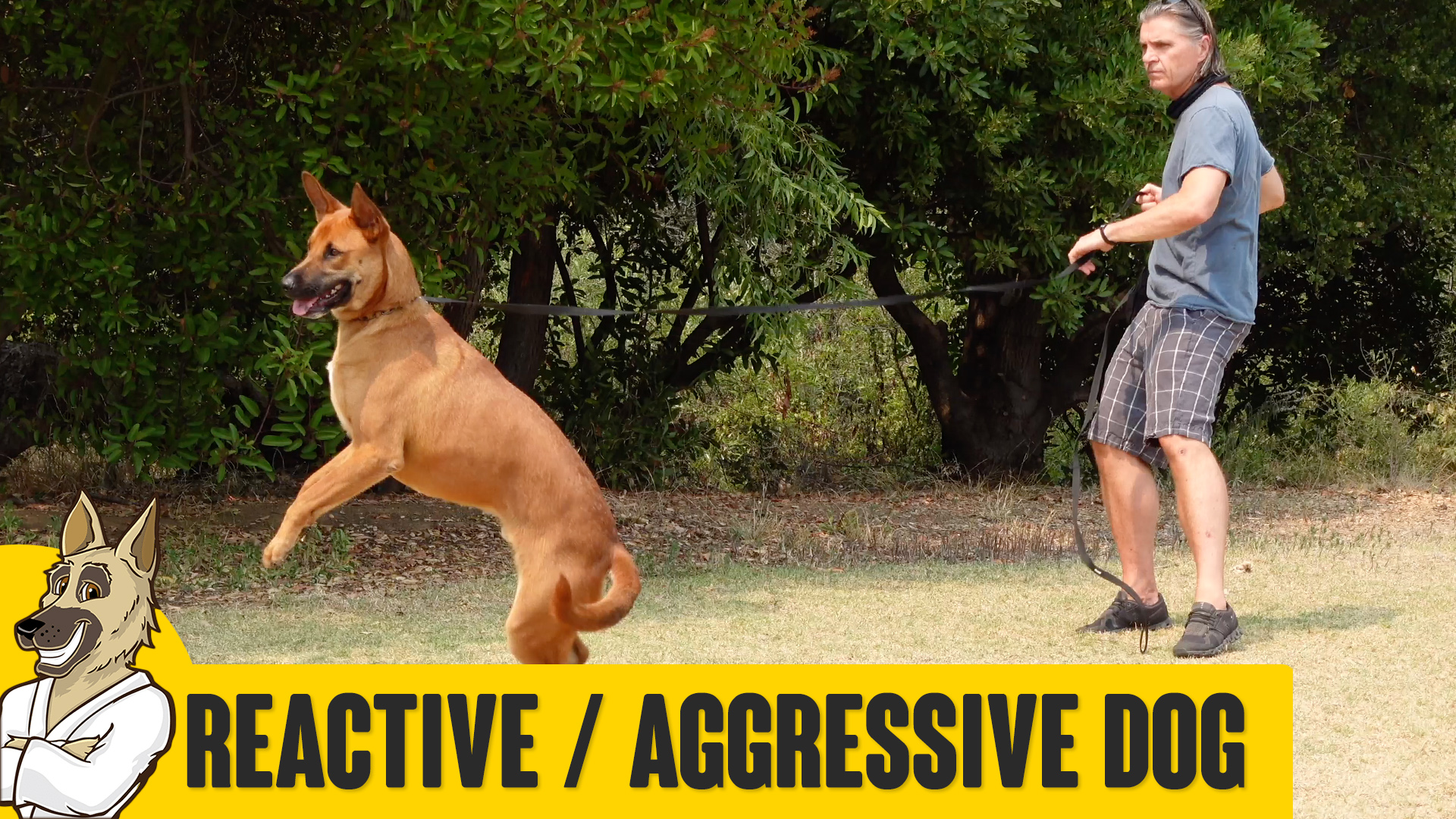
    Dog Clicker Training

    How to Use a Dog Clicker Effectively?

    Using a dog clicker effectively requires proper technique and timing. We’ll explore the key aspects of clicker training to help you get the most out of this powerful training tool.

    Charging the Clicker

    Charging the clicker is the first step in effective dog clicker training. Here’s how to do it:

    • Choose a quiet environment with minimal distractions
    • Click the device and immediately give your dog a treat
    • Repeat this process 5-10 times to establish the connection
    • Observe your dog’s reaction to the clicker sound
    • If your dog is sensitive, muffle the clicker by placing it in your pocket
    • Maintain consistency by always pairing the click with a reward
    • Practice in short sessions to keep your dog engaged
    • Gradually introduce mild distractions as your dog becomes more comfortable

    Remember, charging the clicker creates a positive association between the sound and rewards, laying the foundation for successful training.

    Timing the Click

    Proper timing is crucial for effective dog clicker training. Follow these guidelines:

    • Click the moment your dog performs the desired behavior
    • Aim for precise timing to mark the exact action you want to reinforce
    • Avoid clicking too late, as it may reinforce the wrong behavior
    • Practice your timing without your dog to improve accuracy
    • Use the clicker to capture spontaneous behaviors you want to encourage
    • Click for small steps towards the desired behavior (shaping)
    • Be patient and consistent with your timing
    • Adjust your timing based on your dog’s response and progress

    Mastering the timing of your clicks ensures clear communication with your dog, making the training process more efficient and effective.

    Rewarding Your Dog

    Rewarding your dog properly is essential for successful clicker training:

    • Use high-value treats your dog finds irresistible
    • Deliver the treat immediately after clicking to maintain the association
    • Vary the treats to keep your dog interested and motivated
    • Keep treat sizes small to prevent overfeeding during training sessions
    • Use praise and petting plus to treats for added reinforcement
    • Gradually reduce the frequency of treats as your dog masters a behavior
    • Introduce other rewards like toys or play sessions for variety
    • Always reward after clicking, even if you click accidentally

    Remember, the reward reinforces the behavior marked by the click. Consistent and timely rewarding strengthens the desired behaviors and encourages your dog to repeat them in the future.

    Common Clicker Training Mistakes to Avoid

    When implementing clicker training for dogs, it’s crucial to avoid common pitfalls that can hinder progress and confuse your canine companion. By steering clear of these mistakes, we ensure a more effective and enjoyable training experience for both dogs and handlers.

    Inconsistent Clicking

    Consistency is the cornerstone of successful clicker training. Inconsistent clicking can lead to confusion and slow down the learning process. To maintain consistency:

    • Click every time your dog performs the desired behavior
    • Practice clicking without cues to establish a clear association
    • Use the same sound and intensity for each click

    Poor Timing

    Timing is critical in clicker training. Clicking at the wrong moment can reinforce unintended behaviors. To improve timing:

    • Click at the exact instant your dog performs the desired action
    • Practice your timing with simple behaviors before moving to complex ones
    • Use a training partner to provide feedback on your timing

    Rewarding at the Wrong Time

    Delivering rewards at the incorrect moment can undermine the effectiveness of clicker training. To ensure proper rewarding:

    • Give the treat immediately after clicking
    • Keep treats easily accessible during training sessions
    • Use a treat pouch to minimize delay between click and reward

    Overusing the Clicker

    While the clicker is a powerful tool, overuse can diminish its effectiveness. To avoid this:

    • Use the clicker only for exact training sessions
    • Gradually phase out the clicker as behaviors become reliable
    • Incorporate verbal markers alongside the clicker

    Neglecting to “Charge” the Clicker

    Before starting training, it’s essential to establish the clicker as a positive marker. To properly charge the clicker:

    • Click and immediately treat without asking for any behavior
    • Repeat this process 20-30 times over multiple short sessions
    • Ensure your dog shows excitement upon hearing the click

    Clicking for Undesired Behaviors

    Accidental clicks can reinforce unwanted actions. To prevent this:

    • Be mindful of your clicking during training sessions
    • If you click by mistake, always follow through with a reward
    • Reset and try again if an unintended behavior is clicked

    Failing to Fade Out Food Rewards

    While treats are crucial initially, relying on them long-term can create dependency. To fade out food rewards:

    • Gradually reduce the frequency of treats after behaviors are learned
    • Introduce variable reinforcement schedules
    • Replace food rewards with praise, toys, or life rewards

    Ignoring the Dog’s Emotional State

    A dog’s emotional state significantly impacts learning. To address this:

    • Begin training sessions when your dog is calm and receptive
    • End sessions if your dog shows signs of stress or fatigue
    • Keep training sessions short and positive

    Not Progressing to More Challenging Environments

    Failing to generalize behaviors can limit their reliability. To avoid this:

    • Practice trained behaviors in various locations
    • Gradually introduce distractions during training
    • Proof behaviors in increasingly challenging situations

    Lacking Patience and Consistency

    Clicker training requires patience and consistent practice. To maintain progress:

    • Set realistic expectations for your dog’s learning pace
    • Maintain a regular training schedule
    • Celebrate small victories and incremental progress

    By avoiding these common clicker training mistakes, we set ourselves and our dogs up for success. Remember, effective clicker training is about clear communication, positive reinforcement, and building a strong bond with our canine companions.

    Choosing the Right Dog Clicker

    When selecting a dog clicker for training, it’s crucial to consider several factors to ensure you’re using the most effective tool for your exact needs. Here are key aspects to keep in mind:

    Ergonomics and Comfort

    The ideal dog clicker fits comfortably in your hand and is easy to use for extended periods. Look for clickers with:

    • Ergonomic designs that reduce hand fatigue
    • Lightweight materials for prolonged use
    • Comfortable grip to prevent slipping

    Sound Volume and Clarity

    Different clickers produce varying sound levels and tones. Consider:

    • Quieter clicks for noise-sensitive dogs or indoor training
    • Louder clicks for outdoor use or dogs with hearing impairments
    • Clear, distinct sounds that stand out from background noise

    Durability and Reliability

    A dependable clicker is essential for consistent training. Seek out:

    • High-quality materials resistant to wear and tear
    • Weather-resistant options for outdoor training
    • Consistent clicking mechanism for reliable use

    Portability and Convenience

    Training often occurs in various locations, so prioritize:

    • Compact designs that fit easily in pockets or training bags
    • Attachment options like wristbands or keychains
    • Multi-packs for convenient placement around your home or training area

    Special Features

    Some clickers offer additional functionality:

    • Built-in treat compartments for all-in-one training tools
    • Adjustable volume settings for versatile use
    • Finger-loop designs for hands-free operation

    Type of Training

    Consider your exact training goals:

    • Standard box clickers for general obedience training
    • Finger clickers for precision work or agility training
    • Clicker-whistle combinations for distance work or recall training

    By carefully evaluating these factors, you’ll be better equipped to choose a dog clicker that enhances your training sessions and helps achieve your desired results. Remember, the best clicker is one that you’re comfortable using consistently and that your dog responds to positively.

    Advanced Clicker Training Techniques

    We’ve explored the basics of clicker training, and now it’s time to investigate into more sophisticated methods. Advanced clicker training techniques build upon the foundational principles, allowing us to shape complex behaviors and capture spontaneous good actions. These techniques enhance our ability to communicate with our dogs and accelerate their learning process.

    Shaping Behaviors

    Shaping is a powerful technique that breaks down complex behaviors into smaller, manageable steps. With our clicker, we mark and reward each incremental progress toward the final behavior. For example, when teaching a dog to spin:

    1. Click and treat for a slight head turn
    2. Progress to clicking for a quarter turn
    3. Gradually increase the criteria to a half turn
    4. Finally, reward only for a full spin

    This step-by-step approach allows us to guide our dogs through intricate behaviors they might not naturally perform in a single attempt.

    Capturing Good Behavior

    Clicker training excels at reinforcing spontaneous desirable behaviors. We’re always ready to click and reward when our dog exhibits a behavior we want to encourage. For instance:

    • Lying quietly on a mat instead of begging at the table
    • Sitting politely when greeting people
    • Choosing a toy over chewing on furniture

    By capturing these moments, we reinforce behaviors that occur naturally, making them more likely to be repeated in the future.

    Chaining Behaviors

    Chaining involves linking a series of individual behaviors to create a more complex sequence. We use our clicker to mark the completion of each step in the chain. For example, teaching a dog to fetch a toy and put it in a basket:

    1. Click for picking up the toy
    2. Click for carrying the toy
    3. Click for approaching the basket
    4. Click for dropping the toy in the basket

    As the dog becomes proficient, we only click and reward after the entire sequence is completed.

    Targeting

    Targeting teaches dogs to touch a exact object with a part of their body, usually their nose or paw. We use our clicker to mark the precise moment of contact. This technique is versatile and can be used to:

    • Guide dogs through agility courses
    • Train service dogs to activate buttons or switches
    • Teach dogs to close doors or drawers

    Backchaining

    Backchaining involves teaching a complex behavior by starting with the last step and working backward. We use our clicker to mark each successful step. For instance, when teaching a dog to retrieve a ball and bring it back:

    1. Start by clicking and rewarding for dropping the ball in your hand
    2. Then, click for approaching with the ball
    3. Next, click for picking up the ball
    4. Finally, click for running to the ball

    This method ensures that the dog always knows where the behavior is leading, increasing motivation and success.

    Discrimination Training

    Discrimination training teaches dogs to distinguish between similar objects or commands. We use our clicker to mark correct choices. For example, teaching a dog to differentiate between “sit” and “down” commands:

    1. Give the “sit” command and click only for sitting
    2. Give the “down” command and click only for lying down
    3. Alternate between the two commands, clicking for correct responses

    This technique sharpens a dog’s ability to discern subtle differences in cues and commands.

    By incorporating these advanced clicker training techniques into our regular training sessions, we can achieve more complex and nuanced behaviors. These methods not only enhance our dogs’ learning but also deepen the bond between us and our canine companions. Remember, consistency and patience are key when implementing these advanced techniques.

    Clicker Training for Different Dog Behaviors

    Clicker training is a versatile method that can be applied to teach various dog behaviors. We’ll explore how to use this technique for common commands and more complex behaviors.

    Teaching Basic Commands

    Sit

    To teach a dog to sit using a clicker:

    1. Hold a treat above the dog’s nose
    2. Slowly move the treat backward over the dog’s head
    3. As the dog’s bottom touches the ground, click immediately
    4. Reward with the treat

    Repeat this process, gradually phasing out the treat lure while maintaining the click and reward.

    Stay

    For teaching stay:

    1. Ask the dog to sit
    2. Click and treat for a brief moment of stillness
    3. Gradually increase the duration before clicking
    4. Add distance by taking a step back before clicking
    5. Introduce distractions while the dog stays in position

    Come

    To teach a reliable recall:

    1. Start in a low-distraction environment
    2. Call the dog’s name in an excited tone
    3. Click the moment the dog turns towards you
    4. Reward when the dog reaches you
    5. Gradually increase distance and add distractions

    Advanced Behaviors

    Heel

    Teaching a dog to heel:

    1. Start with the dog in a sitting position beside you
    2. Take a step forward, clicking and treating if the dog moves with you
    3. Gradually increase the number of steps before clicking
    4. Add turns and changes in pace, clicking for correct positioning

    Fetch

    To teach fetch using a clicker:

    1. Click and treat when the dog shows interest in the toy
    2. Click for touching the toy, then for picking it up
    3. Toss the toy a short distance, clicking when the dog moves towards it
    4. Click for returning with the toy, then for dropping it

    Trick Training

    Clicker training excels in teaching tricks:

    1. Break down complex behaviors into small, achievable steps
    2. Click and treat for each approximation towards the final behavior
    3. Gradually shape the behavior by only clicking for improved performances

    For example, to teach “roll over”:

    1. Click for lying down
    2. Click for slight movements to the side
    3. Progress to clicking for more pronounced rolling motions
    4. Finally, click only for complete rotations

    Problem Behavior Modification

    Clicker training can also address unwanted behaviors:

    Jumping on People

    1. Ignore jumping behavior
    2. Click and treat when all four paws are on the ground
    3. Gradually increase the duration of standing before clicking

    Excessive Barking

    1. Identify the trigger for barking
    2. Click and treat for quiet moments in the presence of the trigger
    3. Increase the duration of silence required for a click and treat
    1. Stop walking when the leash tightens
    2. Click and treat when the dog creates slack in the leash
    3. Gradually increase the duration of loose leash walking before clicking

    By applying clicker training to various behaviors, we can effectively communicate with our dogs, reinforcing desired actions and modifying problematic ones. This positive reinforcement method creates a strong bond between handler and dog while making the learning process enjoyable for both parties.

    Conclusion

    Dog clickers are powerful tools that revolutionize pet training. By harnessing positive reinforcement they create a clear line of communication between handlers and their canine companions. We’ve explored the science behind clicker training its many benefits and practical techniques for implementation. From basic commands to advanced behaviors clicker training offers a versatile and effective approach to shaping desired actions. By avoiding common mistakes and selecting the right clicker handlers can maximize their training success. Eventually clicker training transforms the learning process into an enjoyable experience strengthening the bond between dogs and their owners.

  • Basic Obedience Dog Training: Essential Training Tips for a Well-Behaved Pup

    Basic Obedience Dog Training: Essential Training Tips for a Well-Behaved Pup

    Ever wondered why some dogs seem to effortlessly follow commands while others appear unruly? The secret lies in basic obedience dog training – a fundamental skill every pet owner should master.

    We believe that teaching your furry friend basic commands isn’t just about having a well-behaved pet; it’s about fostering a strong bond and ensuring their safety. From “sit” and “stay” to “come” and “leave it,” these simple commands form the foundation of a harmonious relationship between you and your canine companion. In this text, we’ll explore the essentials of basic obedience training, why it’s crucial, and how you can get started on this rewarding journey with your four-legged friend.

    Understanding Basic Obedience Dog Training

    Basic obedience dog training is essential for establishing a strong, positive relationship between you and your dog. This training involves teaching fundamental commands that help your dog navigate daily life and respond to your guidance effectively.

    Benefits of Obedience Training

    Obedience training offers many advantages for both dogs and their owners:

    1. Improved communication: Training enhances the bond between you and your dog, creating a shared language.
    2. Enhanced safety: Commands like “come” and “stay” can prevent dangerous situations.
    3. Mental stimulation: Training exercises provide mental challenges, keeping your dog engaged and satisfied.
    4. Reduced behavioral issues: Well-trained dogs are less likely to develop problematic behaviors.
    5. Increased socialization: Obedience classes offer opportunities for dogs to interact with others.
    6. Stress reduction: Clear expectations and consistent training reduce anxiety in dogs.
    7. Greater freedom: A trained dog can be safely included in more activities and environments.

    By investing time in obedience training, we create a harmonious relationship with our canine companions and ensure their well-being.

    When to Start Training Your Dog

    The ideal time to begin obedience training is as soon as you bring your dog home:

    1. Puppies: Start basic training at 8 weeks old, focusing on simple commands and socialization.
    2. Adult dogs: It’s never too late to start training; older dogs can learn new behaviors effectively.
    3. Rescue dogs: Begin training immediately to establish trust and set clear expectations.
    4. Consistent schedule: Dedicate short, daily training sessions for optimal results.
    5. Patience is key: Progress may vary; maintain a positive attitude throughout the process.
    6. Professional help: Consider enrolling in obedience classes or working with a certified trainer for guidance.
    7. Ongoing process: Continue reinforcing learned behaviors throughout your dog’s life.

    Early and consistent training lays the foundation for a well-behaved, confident dog. We recommend starting obedience training as soon as possible to maximize its benefits and create a strong bond with our canine companions.

    Basic Obedience Dog Training

    Essential Equipment for Dog Training

    Effective dog training requires a few key tools to ensure success and make the process smoother for both you and your canine companion. Let’s explore the essential equipment you’ll need to get started with basic obedience training.

    Choosing the Right Treats and Toys

    Treats are crucial for positive reinforcement training. Select treats that are:

    • Small and easily consumed
    • Highly appealing to your dog
    • Soft and easy to chew
    • Low in calories to prevent overfeeding

    Popular options include:

    • Small pieces of cooked chicken or turkey
    • Commercial training treats
    • Small cubes of cheese
    • Freeze-dried liver

    Toys can also serve as rewards, especially for dogs that are more play-motivated than food-motivated. Choose toys that:

    • Are safe and durable
    • Capture your dog’s interest
    • Can be easily carried or thrown
    • Are appropriate for your dog’s size and breed

    Remember to rotate treats and toys to maintain your dog’s interest and prevent boredom during training sessions.

    Leashes, Harnesses, and Collars

    Proper equipment for controlling and guiding your dog is essential for effective training. Here’s what you need to know:

    Leashes:

    • Short leash (4-6 feet): Ideal for basic obedience training and walks
    • Long training leash (15-30 feet): Useful for distance work and recall training
    • Avoid retractable leashes for training as they can be inconsistent and confusing

    Harnesses:

    • Front-clip harnesses: Help reduce pulling and provide better control
    • Back-clip harnesses: Suitable for dogs that don’t pull excessively
    • Choose a harness that fits comfortably and doesn’t restrict movement

    Collars:

    • Flat collars: Standard for everyday use and training
    • Martingale collars: Provide extra control for dogs with narrow heads
    • Head halters: Offer gentle guidance for strong pullers

    Select equipment that’s appropriate for your dog’s size, breed, and training needs. Ensure all items fit properly and are comfortable for your dog to wear during training sessions.

    Obedience Dog Training:

    Fundamental Training Methods

    Basic obedience dog training relies on several proven methods to establish clear communication and create a well-behaved pet. These techniques form the foundation for teaching essential commands and behaviors.

    Positive Reinforcement Techniques

    Positive reinforcement is a cornerstone of effective dog training. This method involves rewarding desired behaviors to increase their frequency. Here’s how it works:

    • Reward timing: Provide treats, praise, or toys immediately after the desired behavior.
    • Consistency: Use the same cue words and rewards for exact behaviors.
    • Variety: Mix up rewards to keep training interesting for your dog.
    • Verbal markers: Use words like “yes” or “good” to signal correct behavior.
    • Gradual progression: Increase difficulty levels as your dog masters each step.
    • Patience: Allow time for your dog to learn and understand new commands.

    Positive reinforcement builds trust, strengthens the bond between you and your dog, and encourages a willingness to learn. It’s an effective way to teach core commands like sit, stay, come, and leave it.

    Clicker Training Basics

    Clicker training is a popular positive reinforcement method that uses a small device to mark desired behaviors. Here’s how to get started:

    1. Introduce the clicker: Click and immediately treat to associate the sound with rewards.
    2. Use the clicker to mark behaviors: Click the moment your dog performs the desired action.
    3. Follow with a treat: Always provide a reward after clicking.
    4. Practice timing: Accurate clicks are crucial for effective communication.
    5. Add verbal cues: Once the behavior is consistent, introduce a command word.
    6. Phase out the clicker: Gradually reduce clicker use as your dog responds to verbal cues.

    Clicker training is precise and helps dogs understand exactly which behavior earned the reward. It’s particularly useful for teaching complex behaviors or working with easily distracted dogs.

    Core Obedience Commands

    Core obedience commands form the foundation of effective dog training. These essential commands help establish clear communication between you and your canine companion, ensuring a well-behaved and responsive pet.

    Sit and Stay

    Teaching your dog to sit and stay are fundamental obedience commands. To train the sit command, stand in front of your dog with a treat. Hold the treat slightly above their head, moving it slowly back. As your dog follows the treat, their rear should lower into a sitting position. Say “Sit” and use a hand signal when they’re in position, then reward immediately.

    For the stay command, start with your dog in a sit or down position. Stand facing your dog, say “Stay,” and use a corresponding hand signal. Take a few steps back while maintaining eye contact. If your dog remains in position, return and reward them. Gradually increase the distance and duration of the stay as your dog improves.

    Come and Down

    The “come” and “down” commands are crucial for your dog’s safety and control. To teach “come,” start in a distraction-free area. Call your dog’s name followed by “come” in an enthusiastic voice. When they reach you, reward them with treats and praise. Practice this in various locations and gradually increase distractions.

    For the “down” command, begin with your dog in a sitting position. Hold a treat close to their nose, then slowly lower it to the ground. As your dog follows the treat, their body should naturally lower into a lying position. Once they’re down, say “Down” and reward them. Repeat this process, gradually reducing the hand motion until your dog responds to the verbal cue alone.

    Heel and Leave It

    “Heel” and “Leave it” are advanced commands that enhance your control over your dog’s behavior. To teach heeling, start with your dog on a leash at your left side. Hold treats in your left hand near your hip. Begin walking, rewarding your dog for staying in position. Use the command “Heel” as you walk, praising and treating when they maintain the correct position.

    The “Leave it” command is essential for preventing your dog from picking up harmful objects. Begin by placing a treat on the floor and covering it with your hand. When your dog loses interest in the covered treat, say “Leave it” and reward them with a different treat. Gradually increase the difficulty by leaving the treat uncovered and using more tempting items.

    Setting Up Effective Training Sessions

    Effective training sessions are crucial for successful dog obedience training. By creating a consistent schedule and choosing the right environment, you’ll set your dog up for success.

    Creating a Training Schedule

    Creating a training schedule is essential for consistent dog obedience training. Here’s how to set up an effective routine:

    • Keep sessions short: Aim for 10-15 minute sessions, especially for puppies with shorter attention spans.
    • Train frequently: Conduct 2-3 sessions daily for optimal learning.
    • Be consistent: Stick to your schedule to establish a routine.
    • Choose optimal times: Train when your dog is alert and responsive, typically after meals or exercise.
    • Use positive reinforcement: Reward desired behaviors with treats, praise, or affection.
    • Adjust for age: Puppies require shorter, more frequent sessions, while adult dogs can handle longer training periods.
    • Incorporate variety: Mix different commands and skills in each session to maintain engagement.
    • Track progress: Keep a log of achievements and areas needing improvement.
    • Start indoors: Begin in a quiet, distraction-free area of your home.
    • Gradually increase distractions: As your dog progresses, introduce mild distractions to reinforce learned behaviors.
    • Use familiar spaces: Train in areas your dog knows well to build confidence.
    • Ensure safety: Choose environments free from hazards or potential dangers.
    • Consider noise levels: Begin in quiet areas and slowly introduce louder environments.
    • Use different surfaces: Practice on various textures (carpet, grass, concrete) to generalize skills.
    • Incorporate outdoor spaces: Once basic commands are mastered indoors, move to enclosed outdoor areas.
    • Adapt to your dog’s needs: Some dogs may require calmer environments, while others thrive with more stimulation.

    Addressing Common Training Challenges

    Training dogs can be a rewarding experience, but it often comes with its share of challenges. We’ll explore two common obstacles in obedience training and provide strategies to overcome them.

    Dealing with Distractions

    Distractions are a important hurdle in dog training. To manage them effectively:

    • Start training in a quiet, controlled environment
    • Gradually introduce distractions as your dog improves
    • Use high-value treats to maintain focus
    • Practice the “Look at Me” command to redirect attention
    • Increase difficulty by training in new locations
    • Employ the “Three D’s” method: Distance, Duration, and Distraction
    • Reward calm behavior in distracting situations
    • Use a long lead for safety when working outdoors
    • Be patient and consistent in your approach

    Remember, every dog progresses at their own pace. Celebrate small victories and adjust your training plan as needed.

    Maintaining Consistency

    Consistency is key to successful obedience training. To maintain a consistent approach:

    • Establish clear rules and boundaries for your dog
    • Use the same commands and hand signals consistently
    • Involve all family members in the training process
    • Create a daily training schedule and stick to it
    • Keep training sessions short and frequent
    • Use positive reinforcement techniques consistently
    • Avoid confusing your dog with mixed signals
    • Be patient and persistent in your training efforts
    • Adjust your expectations based on your dog’s age and breed
    • Seek professional help if you’re struggling to maintain consistency

    By addressing these common challenges head-on, we can create a more effective and enjoyable training experience for both dogs and their owners.

    Advanced Training Techniques

    After mastering basic obedience commands, it’s time to take your dog’s training to the next level. Advanced training techniques help reinforce learned behaviors and introduce more complex commands, improving your dog’s overall obedience and responsiveness.

    Proofing Behaviors

    Proofing behaviors is an essential step in dog training that ensures your pet responds to commands in various environments and situations. Start by practicing commands in different locations around your home, gradually increasing distractions. Use the “Three D’s” method – Distance, Duration, and Distraction – to challenge your dog’s focus. Introduce new sights, sounds, and smells while asking for known behaviors. Reward your dog for maintaining focus and following commands even though distractions. Practice in various outdoor settings, such as parks or busy streets, to further proof behaviors. Remember to be patient and consistent, as proofing takes time and repetition to achieve reliable responses in all situations.

    Introducing New Commands

    Introducing new commands builds on your dog’s existing knowledge and expands their repertoire of behaviors. Start by choosing a command that complements your dog’s current skills. Use clear, concise verbal cues paired with distinct hand signals for each new command. Break complex behaviors into smaller, manageable steps, rewarding progress at each stage. Incorporate the new command into your regular training sessions, gradually increasing difficulty as your dog becomes more proficient. Some advanced commands to consider include:

    1. “Place” or “Go to your spot”
    2. “Leave it” with increased temptations
    3. “Heel” for loose-leash walking
    4. “Quiet” for controlling excessive barking
    5. “Wait” at doors or before meals

    Use positive reinforcement techniques, offering high-value treats and enthusiastic praise for successful attempts. Practice new commands in various environments to ensure generalization. Be patient and consistent, allowing your dog time to understand and master each new behavior. Remember to keep training sessions short and enjoyable, ending on a positive note with a familiar, easy command. As your dog progresses, gradually phase out treats and rely more on verbal praise and other forms of reward.

    Professional Training Options

    Professional dog training offers structured guidance for pet owners seeking expert assistance. These options provide customized approaches to address exact training needs and behavioral issues.

    Group Classes vs. Private Lessons

    Group classes offer socialization opportunities and cost-effective training. Dogs learn alongside peers, exposing them to various distractions. Classes typically cover basic obedience commands and general behavior modification.

    Private lessons provide personalized attention and customized training plans. Trainers work one-on-one with dogs and owners, addressing exact issues or advanced training goals. These sessions often take place in the home environment, allowing trainers to observe and address behaviors in context.

    Both options have merits:

    • Group classes: Affordable, social, structured curriculum
    • Private lessons: Customized approach, focused attention, flexible scheduling

    The choice depends on the dog’s temperament, training goals, and owner preferences. Some owners opt for a combination of both to maximize benefits.

    Selecting a Qualified Trainer

    Choosing a qualified dog trainer is crucial for effective obedience training. Consider these factors when selecting a professional:

    1. Credentials and certifications:
    • Look for trainers certified by reputable organizations (e.g., CPDT-KA, KPA CTP)
    • Verify membership in professional associations (e.g., APDT, IAABC)

    2. Training philosophy:

      • Prioritize trainers who use positive reinforcement methods
      • Avoid those relying on punitive techniques or outdated dominance theories

      3. Experience and specialization:

        • Assess the trainer’s experience with your dog’s breed or exact issues
        • Inquire about their success rates and case studies

        4. Observation and evaluation:

          • Attend a class or watch a training session before committing
          • Evaluate the trainer’s communication skills and rapport with dogs and owners

          5. References and reviews:

            • Request client testimonials and references
            • Check online reviews and ratings from multiple sources

            6. Continuing education:

              • Ensure the trainer stays updated on current training techniques and research
              • Look for participation in workshops, seminars, or conferences

              7. Customization and flexibility:

                • Choose trainers who tailor their approach to individual dogs and owners
                • Seek professionals who adapt their methods as needed

                8. Clear policies and contracts:

                  • Review training agreements, pricing, and cancellation policies
                  • Ensure transparency in all aspects of the training program

                  By carefully selecting a qualified trainer, you’ll set the foundation for successful obedience training and a harmonious relationship with your dog.

                  Conclusion

                  Basic obedience dog training is a rewarding journey that strengthens the bond between you and your furry friend. With patience consistency and the right techniques you’ll create a well-behaved companion who responds to your commands. Remember that every dog is unique so tailor your approach to suit your pet’s needs. Whether you choose to train at home or seek professional help the effort you invest will pay off in a harmonious relationship with your four-legged family member. Start your training adventure today and watch your dog flourish into a confident well-mannered companion.

                1. Dog Sitter Rates: What to Pay for a Week of Care (2025 Guide)

                  Dog Sitter Rates: What to Pay for a Week of Care (2025 Guide)

                  Ever wondered how much it’ll cost to keep your furry friend happy while you’re away for a week? Figuring out how much to pay a dog sitter can be tricky, but we’re here to help you navigate this important decision.

                  When it comes to hiring a dog sitter for a week, costs can range from $250 to $500 on average. But, the actual rate depends on various factors like location, the sitter’s experience, and your dog’s exact needs. We’ll explore these elements and provide guidance on determining a fair payment that works for both you and your sitter.

                  In this text, we’ll break down the key considerations for setting a dog sitter’s rate, discuss additional services that might affect the cost, and offer tips for clear communication with your sitter. By the end, you’ll be equipped to make an well-informed choice that ensures your pup’s well-being without very costly.

                  Understanding Dog Sitting Services

                  Dog sitting services provide care for pets when their owners are away. These services ensure that dogs receive proper attention, exercise, and care in their familiar environment.

                  Types of Dog Sitters

                  Professional pet sitters offer specialized care for dogs and other pets. They typically charge $25 per 30-minute visit or $20 to $30 per day for regular care. For overnight stays, rates range from $45 to $75 per night. A week-long service can cost between $250 and $375, depending on the number of pets and services required.

                  Hobby pet sitters provide more affordable options, charging about 60-70% of professional rates. Their services include $14-$19 for a 15-minute visit and $21-$32 for a 45- to 60-minute visit. Overnight stays with hobby sitters usually cost $65 to $75.

                  House sitters who also care for pets typically charge $30 to $65 per day, combining pet care with house sitting duties. This option offers comprehensive care for both the home and pets.

                  Duties and Responsibilities

                  Dog sitters‘ primary responsibility is maintaining the pet’s routine in their home environment. This includes:

                  1. Feeding and providing fresh water
                  2. Walking and exercising the dog
                  3. Administering medications if needed
                  4. Cleaning up after the pet
                  5. Providing companionship and playtime

                  Professional sitters often offer additional services such as:

                  1. Collecting mail and packages
                  2. Watering plants
                  3. Basic house maintenance

                  Dog sitters also keep owners updated on their pet’s behavior and well-being throughout the stay. They’re responsible for addressing any emergencies or health concerns that may arise during their care.

                  The level of attention varies between regular visits and overnight care. Regular visits involve multiple daily check-ins, while overnight care provides more continuous supervision. The choice depends on the dog’s needs and the owner’s preferences.

                  Factors Affecting Dog Sitting Rates

                  Dog sitting rates vary based on several key factors. Understanding these elements helps determine fair compensation for a week of dog sitting services.

                  Geographic Location

                  Geographic location significantly impacts dog sitting rates. Urban areas typically command higher prices due to increased demand and higher living costs. For instance:

                  • NYC: Average rate of $21 per hour
                  • Charlotte, NC: Average rate of $15 per hour

                  Dog sitters in cities often charge more as it’s frequently their full-time job. Rural areas generally have lower rates due to reduced living expenses and travel costs. When setting or evaluating rates, consider the local market and cost of living to ensure competitive and fair pricing.

                  Duration of Service

                  The duration of dog sitting service directly affects the overall cost. Typical rate structures include:

                  • 30-minute visit: $25 on average
                  • Daily rate (multiple visits): $20 to $30
                  • Weekly rate: $250 to $375 for multiple daily visits

                  Longer commitments often come with discounted rates. For example, a week-long booking might offer a lower daily rate compared to individual day bookings. When calculating costs for a week, factor in the number of visits per day and any overnight stays required.

                  Number and Type of Pets

                  The number and type of pets in a household influence dog sitting rates:

                  • Standard rates typically cover one pet
                  • Additional pets: $4 to $5 extra per pet, per session
                  • Large or high-energy breeds may incur higher fees
                  • Multiple dogs require more time and effort

                  Sitters may charge more for caring for puppies or senior dogs due to increased attention and care needs. When discussing rates, clearly communicate the number and exact needs of each pet to ensure accurate pricing.

                  Dog Sitter Rates

                  Special Care Requirements

                  Special care requirements can significantly impact dog sitting rates:

                  • Medication administration: Additional fee per dose
                  • Post-surgery care: Higher rates due to increased attention
                  • Senior dog care: Extra charges for mobility assistance or frequent potty breaks
                  • Behavioral issues: May require specialized experience, resulting in higher rates

                  Discuss any special care needs upfront with potential sitters. This ensures they’re equipped to handle exact requirements and allows for accurate pricing based on the level of care needed.

                  Holidays and Peak Seasons

                  Holidays and peak seasons often come with premium pricing for dog sitting services:

                  • Holiday surcharges: Average 25% increase
                  • Last-minute bookings (less than 48 hours notice): 10-25% additional fee
                  • Summer and winter holidays: Higher demand leads to increased rates
                  • Weekends: May have slightly higher rates than weekdays

                  Plan ahead for holiday periods to secure better rates and availability. Some sitters offer discounts for repeat clients or longer stays, even during peak seasons. Always confirm holiday rates and policies when booking to avoid surprises.

                  Average Costs for Dog Sitting

                  Dog sitting costs vary based on several factors, including location, services provided, and the sitter’s experience. Here’s a breakdown of average costs for different dog sitting arrangements.

                  Daily Rates

                  Daily rates for dog sitting typically range from $20 to $60, depending on the level of care required and the sitter’s qualifications. In-home dog sitting services average around $20 to $30 per day. For more specialized care or in high-demand areas, rates can reach up to $60 daily. Hourly rates also fluctuate significantly, with some cities seeing prices between $12.38 and $19.15 per hour. These rates often cover basic services such as feeding, walking, and providing companionship for your dog. Factors like the number of pets, additional services, and the sitter’s experience can influence the final daily rate.

                  Weekly Rates and Discounts

                  Weekly dog sitting rates generally fall between $250 and $375, offering a more cost-effective option for longer stays. This price range typically includes house sitting services if overnight stays are required. Many sitters offer discounts for extended bookings, making weekly rates more attractive than daily rates multiplied by seven. The exact services included in a weekly rate can vary, potentially covering 24-hour care, care for multiple pets, or addressing special needs. When booking for a full week, it’s essential to discuss the exact services provided and any potential additional fees to ensure you’re getting the best value for your money.

                  Overnight Pet Sitting Costs

                  Overnight pet sitting services usually cost between $45 and $75 per night, with some premium services charging up to $100 nightly. These rates often depend on factors such as the sitter’s experience, the dog’s exact needs, and the location. Overnight stays typically include evening and morning walks, feeding, and constant supervision throughout the night. Some sitters offer 10 or 12-hour overnight services, starting around 7-9 PM and ending at 7 AM. While not all pets require overnight care, it can be beneficial for dogs with separation anxiety, medical issues, or those needing extra attention. When considering overnight pet sitting, discuss the exact services included to ensure they meet your dog’s needs.

                  Additional Services and Fees

                  When hiring a dog sitter for a week, it’s essential to consider the additional services and fees that may impact the overall cost. These extras can significantly affect the final price and the quality of care your dog receives.

                  In-Home vs. Boarding Options

                  In-home pet sitting and boarding facilities offer distinct advantages and pricing structures. In-home care typically costs $30 to $65 per day, providing a comfortable environment for your dog and added home security. This option allows your pet to maintain their routine and reduces stress. Boarding facilities, on the other hand, charge between $20 to $30 per day for basic care. While potentially more affordable, boarding may not suit all dogs, especially those with anxiety or special needs. When choosing between these options, consider your dog’s temperament, the level of personalized attention required, and your budget constraints.

                  Dog Sitter Rates

                  Extra Activities and Care

                  Dog sitters often provide additional services that can increase the overall cost. These may include:

                  • Extended walks or playtime: $5-$10 per 30 minutes
                  • Administering medication: $5-$15 per day
                  • Grooming services: $20-$50 depending on complexity
                  • Training reinforcement: $15-$25 per session
                  • Transportation to vet appointments: $20-$30 per trip

                  Special care for senior dogs or those with medical conditions may incur extra charges of $10-$20 per day. During holidays or peak seasons, expect surcharges of 10-20% on regular rates. It’s crucial to discuss these potential extras with your sitter beforehand to avoid unexpected costs and ensure your dog receives the care they need.

                  How to Choose a Dog Sitter?

                  Selecting the right dog sitter is crucial for your pet’s well-being and your peace of mind. We’ll explore key factors to consider when making this important decision.

                  Professional vs. Hobby Sitters

                  Professional dog sitters typically offer more reliable and comprehensive services. They charge $25 per 30-minute visit or $20 to $30 per day for regular care. Hobby sitters, on the other hand, provide more affordable options at 60-70% of professional rates. While professionals often have structured schedules and policies, hobby sitters may offer more flexibility. But, hobby sitters might have limited availability and may not carry insurance. When choosing between the two, consider your budget, your dog’s needs, and the level of service you require. Professional sitters generally provide more consistent care and have backup plans in case of emergencies.

                  Qualifications and Experience

                  A dog sitter’s qualifications and experience are essential factors in ensuring quality care for your pet. Look for sitters with certifications from reputable organizations like the National Association of Professional Pet Sitters or Pet Sitters International. These certifications indicate a commitment to professional standards and ongoing education. Experience is equally important; seasoned sitters are better equipped to handle various situations and pet personalities. Ask potential sitters about their experience with dogs similar to yours in size, breed, or temperament. Don’t hesitate to request references from past clients to gauge their reliability and expertise. A well-qualified and experienced sitter can provide customized care that meets your dog’s exact needs.

                  Insurance and Bonding

                  Insurance and bonding are critical considerations when choosing a dog sitter. Professional pet sitters often carry liability insurance, which protects you and your property in case of accidents or damages during their service. Bonding provides additional financial protection against theft or dishonesty. While hobby sitters may offer lower rates, they typically don’t carry insurance, potentially leaving you responsible for any incidents. When interviewing potential sitters, ask about their insurance coverage and request proof of insurance and bonding. This extra layer of protection ensures that you’re covered in unforeseen circumstances. Remember, the peace of mind that comes with a fully insured and bonded sitter often justifies the higher cost of professional services.

                  Negotiating and Structuring Payment

                  When hiring a dog sitter for a week, it’s crucial to establish a clear payment structure. We’ll explore different payment options and tipping etiquette to help you make informed decisions.

                  Hourly vs. Flat Rate Options

                  Hourly rates and flat rates are common payment structures for dog sitting services. Hourly rates range from $12 to $26 per hour, depending on location and services provided. In urban areas like New York, rates can reach $17 to $26 per hour, totaling around $688 for a 40-hour week. Flat rates offer more predictable costs, with professional pet sitters charging $20 to $30 per day or $45 to $75 per night.

                  For a week of care, expect to pay $250 to $375. House sitters who also care for pets typically charge $30 to $65 per day, or $210 to $455 per week. For 24/7 care in the sitter’s home, rates can range from $100 to $150 per day, totaling $700 to $1,050 per week.

                  Tipping Etiquette

                  Tipping dog sitters isn’t mandatory but is often appreciated for exceptional service. A common practice is to tip 15-20% of the total cost for outstanding care. For a week-long sitting arrangement, consider a tip of $25 to $50, depending on the level of service provided. Factors influencing tipping include the sitter’s reliability, attentiveness to your dog’s needs, and any additional tasks performed beyond the agreed-upon services. If the sitter went above and beyond, such as staying longer than scheduled or handling unexpected situations, a higher tip may be warranted. Remember, tipping is a personal decision and should reflect your satisfaction with the service provided.

                  Benefits of Professional Dog Sitting

                  Professional dog sitting offers many advantages for both pets and their owners. Let’s explore the key benefits of choosing a professional service for your furry friend’s care.

                  Personalized Care

                  Professional dog sitters provide customized care to meet your pet’s exact needs. They create customized schedules for feeding, walking, and playtime based on your dog’s routines and preferences. This personalized approach ensures your pet receives consistent care, maintaining their familiar routines even when you’re away. Professional sitters are experienced in handling various breeds and temperaments, allowing them to adapt their care techniques to suit your dog’s personality. They’re also equipped to administer medications and handle special dietary requirements, ensuring your pet’s health needs are met without disruption.

                  Peace of Mind for Pet Owners

                  Hiring a professional dog sitter offers pet owners important peace of mind. Professional sitters are insured and bonded, protecting you from liability if accidents occur in your home. They’re trained in pet first aid and can recognize signs of illness or distress, promptly addressing any health concerns that may arise. Professional sitters also provide regular updates on your pet’s well-being, often including photos or videos, keeping you connected while you’re away. Their reliability and commitment to scheduled visits ensure your pet receives consistent care, eliminating worries about missed feedings or walks. Also, professional sitters often offer home security benefits, such as rotating lights and collecting mail, giving the appearance that your home is occupied.

                  Conclusion

                  Choosing the right dog sitter and determining fair compensation involves careful consideration of various factors. We’ve explored the range of costs typically associated with dog sitting services and highlighted key elements that influence pricing. By understanding these factors you’ll be better equipped to make an well-informed choice that ensures your pet receives quality care while you’re away. Remember to communicate clearly with your chosen sitter discuss all expectations and agree on terms upfront. With the right preparation you can find a reliable dog sitter who’ll provide excellent care for your furry friend at a fair price giving you peace of mind during your time apart.

                2. Aggressive Dog Training: Effective Dog Training Techniques That Work

                  Aggressive Dog Training: Effective Dog Training Techniques That Work

                  Are you struggling with an aggressive dog that’s causing stress and frustration? You’re not alone. Many pet owners face challenges with canine aggression, but there’s hope for a more harmonious relationship with your furry friend.

                  We understand the complexities of dog aggression and its impact on both pets and their families. That’s why we’re here to shed light on effective aggressive dog training techniques. From understanding the root causes to implementing customized rehabilitation programs, we’ll guide you through the process of transforming your dog’s behavior.

                  In this text, we’ll explore expert-backed strategies for addressing aggression, safety measures to consider during training, and the importance of consistency in your approach. We’ll also discuss how to identify warning signs and when to seek professional help. By the end, you’ll have valuable insights to help create a safer, happier environment for you and your canine companion.

                  Understanding Aggressive Behavior in Dogs

                  Aggressive behavior in dogs is a complex issue that requires a thorough understanding of its causes, types, and appropriate training methods. We’ll explore the common triggers and various forms of aggression to help pet owners better address this challenging behavior.

                  Common Causes of Dog Aggression

                  Dog aggression stems from various factors, including genetic predispositions, environmental influences, and individual experiences. Fear and anxiety are primary triggers, often resulting from lack of socialization or past trauma. Some breeds may have a higher tendency towards certain aggressive behaviors, but it’s crucial to remember that any dog can develop aggression. Environmental stressors, such as changes in routine or living situations, can also contribute to aggressive tendencies. Pain or discomfort from medical conditions may cause dogs to act aggressively as a defensive mechanism. Understanding these underlying causes is essential for developing effective training strategies and creating a safe environment for both dogs and their owners.

                  Types of Aggression in Dogs

                  Dogs exhibit different types of aggression, each with unique characteristics and triggers. Territorial aggression occurs when dogs protect their perceived domain, such as the home or yard. Resource guarding involves defending valued items like food, toys, or even people. Fear-based aggression is common and stems from the dog’s attempt to create distance from perceived threats. Maternal aggression can be seen in mother dogs overly protective of their puppies. Protective aggression involves guarding family members or other dogs. Pain-induced aggression may occur when a dog is hurt and lashes out to prevent further discomfort. Recognizing these exact types of aggression helps in tailoring appropriate training approaches and management strategies for each unique situation.

                  Assessing Your Dog’s Aggressive Behavior

                  Understanding and assessing your dog’s aggressive behavior is crucial for effective training and rehabilitation. We’ll explore the signs of aggression to watch for and when it’s appropriate to seek professional help.

                  Signs of Aggression to Watch For

                  Dogs display various warning signs when exhibiting aggressive behavior. These include:

                  • Growling, snarling, or showing teeth
                  • Raised hackles (hair standing up along the back)
                  • Stiff body posture with a rigid tail
                  • Direct, intense eye contact
                  • Snapping or biting
                  • Lunging or charging
                  • Excessive barking or growling
                  • Ears pinned back or forward
                  • Lip licking or yawning (stress signals)

                  Recognizing these signs early helps prevent escalation and allows for timely intervention. It’s important to note that aggression can manifest differently in individual dogs, and some may display subtle cues that are easily missed.

                  When to Seek Professional Help

                  Professional assistance is necessary in several situations:

                  • Severe aggression: If your dog’s behavior poses a important risk to people or other animals
                  • Sudden onset: When aggression appears abruptly without apparent cause
                  • Ineffective home training: If your efforts to modify behavior haven’t yielded results
                  • Multiple triggers: When aggression occurs in various contexts or situations
                  • History of biting: If your dog has a record of biting people or other animals
                  • Uncertainty: When you’re unsure about the cause or how to address the aggression

                  Consulting a certified dog behaviorist or professional trainer provides expert guidance customized to your dog’s exact needs. These professionals can assess the underlying causes, develop customized training plans, and offer ongoing support throughout the rehabilitation process.

                  Positive Reinforcement Techniques for Aggressive Dogs

                  Positive reinforcement techniques are highly effective for training aggressive dogs. These methods focus on rewarding desired behaviors, building trust, and creating a positive learning environment for the dog.

                  Reward-Based Training Methods

                  Reward-based training is a cornerstone of positive reinforcement for aggressive dogs. This approach involves:

                  • Offering treats, praise, or toys for good behavior
                  • Timing rewards immediately after desired actions
                  • Using high-value rewards for challenging situations
                  • Gradually reducing treat frequency as behaviors improve
                  • Incorporating verbal cues and hand signals

                  Reward-based methods create positive associations with good behavior, motivating dogs to repeat these actions. This technique helps diminish aggressive tendencies by redirecting focus to desirable behaviors. Consistency is key in reward-based training, ensuring dogs understand the connection between their actions and positive outcomes.

                  Building Trust and Confidence

                  Building trust and confidence is crucial when working with aggressive dogs. Key strategies include:

                  • Creating a safe, calm environment for training
                  • Using gentle, non-threatening body language
                  • Respecting the dog’s personal space
                  • Gradually exposing the dog to trigger situations
                  • Rewarding calm behavior in potentially stressful scenarios
                  • Providing mental stimulation through puzzle toys and games

                  Establishing trust helps aggressive dogs feel more secure in their environment and with their handlers. This increased sense of security often leads to reduced anxiety and aggression. Confidence-building exercises, such as obedience training and socialization, further support the dog’s emotional well-being and ability to cope with challenging situations.

                  Desensitization and Counterconditioning Strategies

                  Desensitization and counterconditioning are essential techniques in aggressive dog training. These strategies help reduce reactive behaviors and create positive associations with triggers.

                  Gradual Exposure to Triggers

                  Gradual exposure is the cornerstone of desensitization in aggressive dog training. We introduce the dog to aggression-inducing stimuli at a low intensity, slowly increasing exposure over time. This process involves:

                  • Starting with the trigger at a distance that doesn’t provoke an aggressive response
                  • Gradually decreasing the distance or increasing the intensity of the trigger
                  • Maintaining the dog’s calm state throughout the process
                  • Progressing incrementally to avoid setbacks
                  • Consistently exposing the dog to controlled situations

                  By implementing gradual exposure, we help dogs build confidence and resilience. This approach allows them to learn that the triggering stimuli aren’t threats, reducing their aggressive reactions over time.

                  Changing Emotional Responses

                  Counterconditioning focuses on changing a dog’s emotional response to triggers. We pair the triggering stimuli with positive experiences to create new, favorable associations. This process includes:

                  • Identifying exact triggers that cause aggressive behavior
                  • Introducing high-value rewards when the dog encounters the trigger
                  • Timing the rewards precisely to coincide with the trigger’s presence
                  • Gradually increasing the intensity of the trigger while maintaining positive associations
                  • Consistently reinforcing calm behavior in the presence of triggers

                  Through counterconditioning, we help dogs develop positive emotions towards previously threatening stimuli. This shift in emotional response reduces the likelihood of aggressive reactions and promotes more relaxed behaviors in challenging situations.

                  Obedience Training for Aggressive Dogs

                  Obedience training is a cornerstone in managing and reducing aggressive behavior in dogs. It establishes control, improves communication, and creates a foundation for more advanced behavioral modifications.

                  Essential Commands for Control

                  Mastering basic commands is crucial for controlling aggressive dogs. The core commands include:

                  1. Sit: Teaches the dog to remain calm and focused
                  2. Stay: Builds impulse control and patience
                  3. Come: Ensures reliable recall in potentially dangerous situations
                  4. Leave it: Prevents the dog from captivating with triggers
                  5. Down: Promotes a submissive posture and relaxation

                  These commands help reinforce the owner’s role as the leader, which is vital for dogs exhibiting dominance-related aggression. A solid “recall” command, for instance, can prevent confrontations with strangers or other animals. Consistent practice of these commands in various environments strengthens the dog’s response and enhances overall obedience.

                  Aggressive Dog Training

                  Consistency in Training

                  Consistency is key to successful obedience training for aggressive dogs. Regular training sessions and daily reinforcement of learned behaviors are essential for long-term success. Here’s how to maintain consistency:

                  1. Schedule daily training: Set aside dedicated time for training exercises
                  2. Use clear cues: Employ consistent verbal and visual signals for each command
                  3. Reward appropriately: Offer immediate, high-value rewards for correct responses
                  4. Practice in different settings: Gradually expose the dog to various environments
                  5. Involve all family members: Ensure everyone uses the same commands and techniques
                  6. Adapt to the dog’s learning style: Some dogs respond better to visual cues, others to verbal commands
                  7. Maintain patience: Progress may be slow, but consistency will yield results over time

                  By incorporating training into daily activities, we reinforce established behaviors and foster ongoing learning. This consistent approach helps aggressive dogs develop better impulse control and respond appropriately in challenging situations.

                  Creating a Safe Environment

                  Creating a safe environment is crucial when training aggressive dogs. We’ll explore effective strategies for managing triggers and using proper equipment to ensure safety for both the dog and its handlers.

                  Managing Triggers and Stressors

                  Managing triggers and stressors is essential in aggressive dog training. We identify and control environmental factors that provoke aggressive behavior. Separation from triggers is key; keep the dog in a secure area when guests are present. Controlled exposure techniques gradually introduce stimuli that trigger aggression in a safe setting. This desensitization process helps dogs adapt and respond more calmly over time. Positive reinforcement training encourages desirable behaviors by rewarding calm and obedient responses with treats, praise, or toys. We carry out visual cues before approaching unfamiliar dogs, creating a proactive and controlled environment. Adapting safety measures as the dog progresses in training is crucial, with gradual reduction of tools like muzzles signifying increased trust and improved behavior.

                  Proper Use of Equipment

                  Proper equipment use is vital in managing aggressive dogs safely. We recommend using appropriate tools to maintain control and prevent incidents. Muzzles are essential for dogs with a history of biting or severe aggression. Choose a basket-style muzzle that allows the dog to pant and drink while preventing bites.

                  Head halters and no-pull harnesses provide better control during walks, redirecting the dog’s attention and reducing pulling behavior. For indoor management, baby gates or exercise pens create safe zones, separating the dog from potential triggers. Crates offer a secure space for the dog to relax and can be used during high-stress situations. When introducing new equipment, we always associate it with positive experiences through treats and praise, ensuring the dog views the tools as non-threatening.

                  Exercise and Mental Stimulation

                  Regular physical activity and mental enrichment are crucial components of aggressive dog training. These elements help reduce stress and anxiety while promoting overall behavioral wellness.

                  Importance of Physical Activity

                  Physical exercise plays a vital role in managing aggressive dog behavior. It helps decrease stress and anxiety levels, which often contribute to aggression. Here’s why physical activity is essential:

                  • Energy Release: Regular exercise allows dogs to expend excess energy, reducing the likelihood of aggressive outbursts.
                  • Stress Reduction: Activities like walks, runs, or playtime help lower cortisol levels, promoting relaxation.
                  • Bonding Opportunities: Captivating in physical activities with your dog strengthens your relationship and builds trust.
                  • Improved Focus: Well-exercised dogs are typically more receptive to training and less easily distracted.
                  • Better Sleep: Adequate physical activity leads to improved sleep patterns, contributing to overall behavioral stability.

                  To maximize the benefits, tailor exercise routines to your dog’s energy level and preferences. This approach ensures activities are enjoyable and effective in managing aggression.

                  Enrichment Activities for Behavioral Wellness

                  Mental stimulation is equally important as physical exercise in promoting behavioral wellness for aggressive dogs. Here are some effective enrichment activities:

                  • Puzzle Toys: Provide interactive toys that challenge your dog’s problem-solving skills, keeping their mind engaged.
                  • Scent Games: Hide treats or toys around the house or yard, encouraging your dog to use their natural scenting abilities.
                  • Training Sessions: Short, regular training sessions offer mental stimulation while reinforcing positive behaviors.
                  • Obstacle Courses: Set up simple agility courses in your backyard to provide both physical and mental challenges.
                  • Food Dispensing Toys: Use toys that require manipulation to release food, promoting mental engagement during mealtime.
                  • New Experiences: Safely expose your dog to new environments, sounds, and smells to broaden their sensory experiences.

                  Incorporating these activities into your dog’s routine helps reduce boredom, anxiety, and frustration, which are common contributors to aggressive behavior. By providing a balance of physical exercise and mental enrichment, we create a foundation for more effective aggressive dog training and overall behavioral improvement.

                  Avoiding Punitive Methods

                  When addressing aggressive behavior in dogs, it’s crucial to avoid punitive methods. Punishment can exacerbate aggression and create additional behavioral issues. Instead, we focus on positive, alternative approaches that promote trust and encourage desirable behaviors.

                  Why Punishment Can Worsen Aggression

                  Punishment often worsens aggression in dogs due to their lack of understanding and increased fear. Dogs don’t process punishment the same way humans do, leading to heightened anxiety and stress. This emotional state can escalate aggressive tendencies rather than reduce them. Punitive actions create a fearful environment, causing dogs to act out defensively. The dog may associate the punishment with the person administering it or the triggers that initially caused the aggression, further complicating the issue. Eventually, punishment can lead to an escalation of aggressive behavior as the dog feels compelled to protect itself from perceived threats.

                  Alternative Approaches to Correction

                  Instead of punishment, we employ alternative approaches that focus on positive reinforcement and redirection. Positive reinforcement involves rewarding desired behaviors with treats, praise, or toys, encouraging dogs to repeat these actions. Timing is crucial when offering rewards to ensure the dog associates the positive outcome with the correct behavior. In challenging situations, high-value incentives can be particularly effective.

                  Redirection is another valuable technique. When a dog displays undesirable behavior, we shift their attention to a more appropriate activity or command. This approach helps prevent the reinforcement of negative behaviors without resorting to punishment.

                  Timeouts can be an effective alternative to punishment. When a dog exhibits aggressive behavior, we calmly remove them from the situation and place them in a quiet, neutral area for a short period. This method allows the dog to calm down without associating the experience with fear or anxiety.

                  Building trust and confidence is essential in managing aggressive behaviors. We create safe environments, use gentle body language, and gradually expose dogs to triggers in controlled settings. This approach helps reduce anxiety and aggression over time.

                  Incorporating obedience training is crucial for managing aggressive tendencies. Teaching commands like “sit,” “stay,” and “leave it” reinforces the owner’s leadership role and improves communication. Consistent daily practice and clear cues are key to success in this area.

                  By focusing on these alternative approaches, we can effectively address aggressive behavior in dogs without resorting to punitive methods that may exacerbate the problem.

                  Long-Term Management and Prevention

                  Long-term management and prevention of aggressive behavior in dogs require consistent effort and a multi-faceted approach. We’ll explore key strategies to maintain progress and create a safe environment for both dogs and their owners.

                  Ongoing Training and Socialization

                  Ongoing training and socialization are crucial for managing aggressive dogs. Regular obedience sessions reinforce good behaviors and strengthen the bond between dogs and their owners. We recommend:

                  • Daily practice of basic commands like “sit,” “stay,” and “leave it”
                  • Gradual exposure to new environments and stimuli
                  • Controlled interactions with other dogs and people
                  • Positive reinforcement techniques to reward calm behavior
                  • Enrollment in advanced obedience classes or agility training

                  Socialization opportunities should be carefully managed, starting with low-stress situations and gradually increasing difficulty. This approach helps dogs build confidence and learn appropriate responses to various triggers.

                  Maintaining Progress Over Time

                  Maintaining progress in aggressive dog training requires dedication and consistency. We’ve identified several key strategies to ensure long-term success:

                  • Regular assessment: Evaluate the dog’s behavior weekly to track improvements and identify areas needing attention
                  • Consistent routine: Establish a daily schedule for exercise, training, and relaxation
                  • Ongoing management: Continue to use tools like muzzles or harnesses when necessary
                  • Environmental control: Maintain a safe, trigger-free home environment
                  • Professional support: Schedule periodic check-ins with a behaviorist or trainer
                  • Stress reduction: Carry out calming techniques such as massage or aromatherapy
                  • Diet and nutrition: Ensure a balanced diet to support overall health and behavior
                  • Mental stimulation: Provide puzzle toys and enrichment activities to prevent boredom
                  • Family involvement: Educate all household members on proper handling and training techniques

                  By implementing these strategies, we create a foundation for long-term success in managing aggressive behavior. It’s essential to remain patient and committed to the process, as progress may be gradual but eventually rewarding.

                  Conclusion

                  Aggressive dog training requires patience dedication and a comprehensive approach. We’ve explored various techniques from positive reinforcement to desensitization that can transform challenging behaviors. Remember that every dog is unique and progress takes time. By implementing these strategies consistently you’ll create a stronger bond with your pet and foster a safer environment for all. With the right tools knowledge and professional guidance when needed you can help your aggressive dog become a well-adjusted companion. Stay committed to the journey and celebrate small victories along the way.